
Aluminum Windows in Boise
Thermally broken aluminum windows perform well in Boise’s climate; older, non-thermally broken aluminum genuinely don’t, since they conduct heat and cold straight through the frame. Which is exactly why a lot of Boise contractors steer people away from aluminum without much explanation.
The fuller answer is more specific than “yes” or “no,” though. The thing is, there are two genuinely different products people mean when they offer aluminum replacement windows: true aluminum-frame windows and aluminum-clad wood windows, which fit very different projects.
This guide covers both, where each one actually makes sense in the Treasure Valley, and how the project runs from quote to install if you’re ready to move forward.
Are Aluminum Windows a Good Fit for Boise's Climate?
It depends entirely on whether the frame has a thermal break, and it’s worth being upfront about why that matters. The core question behind most searches for energy-efficient aluminum windows in Idaho is whether aluminum windows can actually hold up through an Idaho winter.
Aluminum is a highly efficient conductor, which is great for a lot of applications, but not great for a window frame separating a heated house from a freezing night, since it happily carries that cold straight through to the interior surface.
That’s the source of aluminum’s old reputation: older single-piece aluminum frames could feel cold to the touch, run less efficiently, and even sweat with condensation on cold mornings. None of that is a myth; it’s just physics acting on an older design.
Thermally broken aluminum fixes the core problem rather than working around it, which is why it’s the only aluminum worth considering for an exterior window in a climate like Boise’s. The difference shows up mostly in shoulder-season mornings and the coldest nights of the year, the times when an older aluminum frame would be most likely to feel drafty or collect condensation along the bottom of the glass.
What Is a Thermally Broken Aluminum Window?
A thermally broken aluminum window has a strip of insulating material (usually polyurethane) running through the middle of the frame, physically separating the exterior aluminum from the interior aluminum so heat and cold can’t conduct straight across.
You’ll sometimes see this same feature marketed as “thermally improved” rather than thermally broken — different brands use different terms, but they’re describing the same insulating break in the frame. Instead of one continuous piece of metal from outside to inside, you’ve got two aluminum sections bridged by an insulator.
Pair that with a good Low-E, argon-filled glass package, and a thermally broken aluminum window can perform close to fiberglass or vinyl, while keeping the narrow, modern sightlines aluminum is known for.
A window sold simply as “aluminum” without any mention of a thermal break is almost certainly the older style, and it’s worth asking directly before you buy.
Two Ways to Get Aluminum: True Aluminum Frames vs. Aluminum-Clad Wood
This is where many descriptions of aluminum windows can mislead you, but we strive to be as specific as possible, as we work with Pella, Marvin, and Milgard, and each brand approaches aluminum differently.
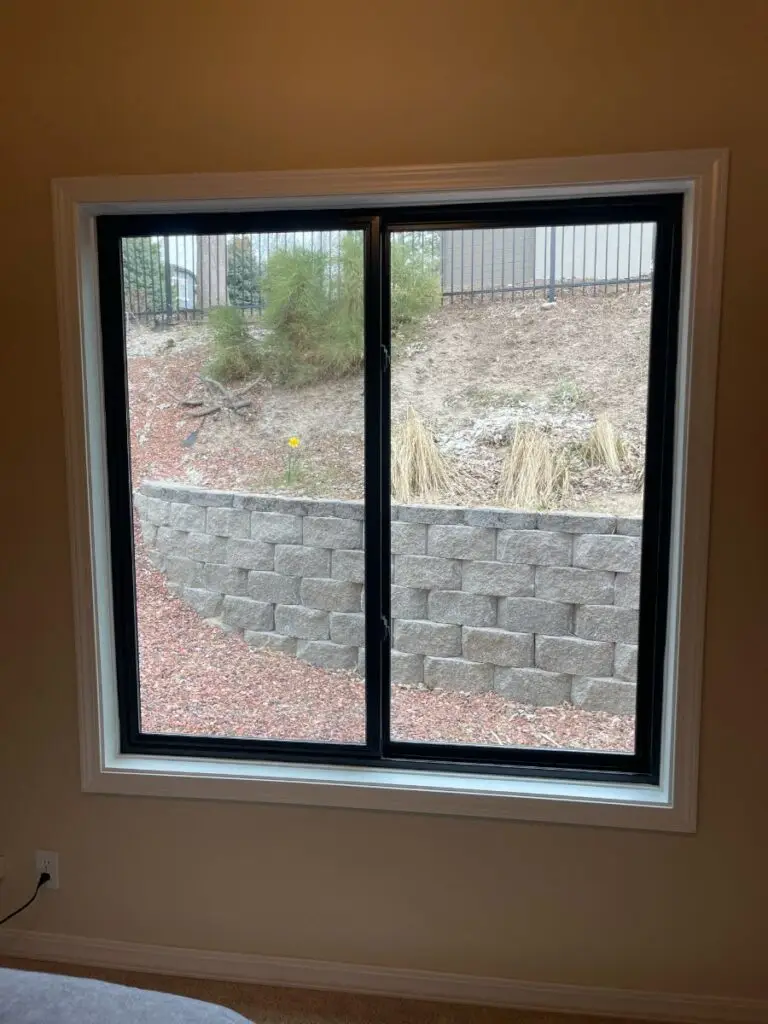
True aluminum-frame windows are what most people picture: the entire frame and sash are extruded aluminum, thermally broken, with narrow profiles that maximize glass area. This is where Milgard aluminum windows come in: their A250 Thermal Break Series is built specifically for this, and their AX450 Moving Glass Wall is a large-format sliding system designed for wide openings where you want as much glass and as little visible frame as possible.
Aluminum-clad wood windows are a different product entirely. A wood-framed window on the inside, wrapped in an aluminum shell on the exterior for weather protection and low maintenance, with the warmth of real wood still visible from inside the house. This is where Pella and Marvin come in: Pella’s Reserve Series uses extruded aluminum cladding, their Lifestyle Series uses roll-formed aluminum cladding, and Marvin’s Signature Ultimate is their flagship extruded aluminum-clad wood line. All three protect against Boise’s sun and weather on the outside while keeping a traditional wood look indoors.
Neither option is objectively “better”, it comes down to the look you’re after. If you want minimal, modern sightlines and the biggest possible glass area, true aluminum (Milgard) is the answer. If you want the durability of an aluminum exterior with a warmer, more traditional wood interior, aluminum-clad windows (Pella or Marvin) are a good fit.
Here’s what each supplier actually offers, collection by collection:
- Milgard A150 Standard Aluminum — a base-tier aluminum frame without a thermal break; AAMA-rated for structural performance, but better suited to mild climates or secondary spaces than year-round living areas in Boise's winters.
- Milgard A250 Thermally Improved Aluminum — the true-aluminum workhorse: narrow sightlines and a polyurethane thermal break built specifically for climates like ours.
- Milgard AX650 Moving Glass Wall — a large-format aluminum sliding door system for wide openings and indoor-outdoor spaces.
- Pella Vista Series — Pella's true thermally broken aluminum line, with ultra-narrow sightlines and modular configurations for modern architecture; available only through select Pella showrooms.
- Pella Reserve Series — aluminum-clad wood with extruded aluminum cladding for a premium, more refined finish.
- Pella Lifestyle Series — aluminum-clad wood with roll-formed aluminum cladding, at a more accessible price point than Reserve.
- Marvin Signature Ultimate — aluminum-clad wood with extruded aluminum cladding, offering the deepest customization on color, hardware, and glass of the three brands.
- Marvin Modern — the reverse combination: an aluminum interior paired with a High-Density Fiberglass exterior, built specifically for large-glass contemporary architecture with narrow sightlines. Not aluminum-clad wood, and not true aluminum-frame either — a distinct third option worth knowing about if you're after a genuinely modern look.
Not sure which one fits your project? Book a free in-home consultation and we’ll bring real samples from all three to compare in person.

Where Aluminum Windows Actually Make Sense in the Treasure Valley
Aluminum isn’t the right call for every house. It’s a strong choice for large openings and walls of glass: wide sliders, big picture windows, and multi-panel glass walls, because aluminum’s strength lets the frame stay thin even at a large size, something vinyl and even fiberglass struggle to match without visibly bulking up.
It also fits contemporary and mid-century modern architecture especially well, which shows up more and more in newer Boise-area neighborhoods like Hidden Springs, Harris Ranch, and parts of Eagle and Southeast Boise where clean lines and expansive glass are part of the design intent.
Sunrooms and indoor-outdoor spaces are another good fit, since large sliding or folding glass walls benefit directly from aluminum’s narrow-frame strength.
On the flip side, if your home is a traditional Craftsman, ranch, or older ranch-style build where wood or vinyl already fits the architecture, aluminum’s modern aesthetic can look out of place — that’s more a design call than a performance one.
Aluminum vs. Vinyl vs. Fiberglass vs. Aluminum-Clad Wood
| Material | Best for | Trade-offs |
|---|---|---|
| Vinyl | Budget-conscious, traditional-style homes | Fewer color/finish options; frames are thicker than aluminum |
| Fiberglass | Long-term durability and energy performance across most home styles | Higher upfront cost than vinyl |
| True aluminum (thermally broken) |
Modern/contemporary homes, large openings, sliding glass walls | Costs more than vinyl; needs a thermal break to perform well in this climate |
| Aluminum-clad wood | Homeowners who want a wood interior with low-maintenance exterior protection | Premium price point; more traditional look than true aluminum |
How Much Do Aluminum Windows Cost in Boise?
True thermally broken aluminum windows typically run $1,200–$2,500+ per window installed, depending on size and configuration — entry-level sits around $1,200–$1,600, with premium and large custom sliding-glass-wall systems climbing toward $2,500 or more.
That’s a real step up from a standard vinyl quote, mostly due to the extrusion process and the thermal break itself. Aluminum-clad wood windows (Pella Reserve, Pella Lifestyle, Marvin Signature Ultimate) generally run $1,000–$2,000+ per window installed, since you’re paying for both a full wood window and the aluminum cladding process — premium configurations with larger glass or custom finishes can run higher.

These are general industry ranges, not a quote; size, glass package, and how many openings you’re doing at once all move the number, so an in-home measurement is really the only way to get a figure specific to your project.
Want a real number instead of a range? Get a free quote and we’ll measure your openings and price out both aluminum options for comparison.
How the Process Works, From Quote to Install
- Free in-home consultation. We look at your openings and bring real samples from Milgard, Pella, and Marvin, not just photos, so you can compare true aluminum against aluminum-clad wood in person.
- Measurement and itemized quote. Every opening is measured individually and priced out, with no vague allowances added later.
- Manufacturing. These are custom-order windows built to your exact openings, not off-the-shelf stock: typically a few weeks out, longer for large custom sliding-glass-wall systems.
- Full-frame installation. Usually completed in a day or two for most homes.
- Final walkthrough. Every window is checked to confirm it seals and operates the way it should before we call the job done.
Historic Districts, Older Homes, and Where Aluminum Isn't Allowed
If your home sits inside one of Boise’s registered historic districts, like the North End, the same rules that govern historic window replacement generally apply here: vinyl is off the table entirely, and the city’s design review tends to favor wood or wood-clad construction that reads as traditional from the street, over a bare, modern-looking metal frame.
Aluminum-clad wood is usually the better fit when replacing historic windows than a true aluminum-frame window would be, but any window replacement visible from the street in a historic district requires a Certificate of Appropriateness before work starts, regardless of material — it’s worth confirming with the City of Boise’s Planning Division early if you’re not sure whether your address falls inside a district boundary.
That same logic holds even without the paperwork. Plenty of older Boise homes were never officially designated historic but are still genuinely old houses with original wood windows nobody’s touched in decades, and for those, aluminum-clad wood is usually still the better call over true aluminum — it keeps a traditional profile from the street while updating everything that actually wears out. If what you’re really after is replacement windows for an old house rather than a full modern remodel, that’s the direction most homeowners land on.
Outside of historic considerations altogether, some newer developments and HOAs in the Treasure Valley, including parts of Meridian and Eagle, have their own architectural guidelines around frame color and style, so it’s worth a quick check of your HOA’s covenants if you’re in a planned community.
Why Treasure Valley Homeowners Trust Boise Custom Windows & Doors
- Deep Local Roots & Contractor Expertise: Founded in 2018 on the Boise Bench by Taylor Richards, bringing 20+ years of local residential construction and general contracting experience.
- Proven Track Record: Trusted by more than 5,200 homeowners across Boise, Meridian, Eagle, Star, Kuna, Nampa, and Caldwell.
- 100% In-House Installers: We never use random subcontractors. Every window is set, flashed, and sealed by our own factory-certified craftsmen to safeguard your home's thermal barrier and manufacturer warranties.
- Top-Tier Brand Flexibility: Authorized suppliers of Pella, Marvin, and Milgard, giving you direct access to vinyl, fiberglass, thermally broken aluminum, and aluminum-clad wood options.
- Zero Red Tape on Historic Permits: Owning a historic home in the North End or Hays Street? We handle the complex historic board approvals, City of Boise paperwork, and Certificates of Appropriateness from start to finish.
- Transparent & Local: No high-pressure 2-hour sales pitches, no "today-only" gimmicks—just honest, itemized pricing backed by real local accountability.

Ready to Talk Through Your Options?
Whether you’re leaning toward Milgard’s true aluminum for a modern build or aluminum-clad wood from Pella or Marvin for a more traditional look, the fastest way to get a real answer is to have someone measure your openings and show you actual samples, not just spec sheets.
Book a free in-home consultation with Boise Custom Windows & Doors and we’ll help you land on the right option and a firm, itemized quote.