
Awning Windows in Boise & the Treasure Valley
Quick Answers About Awning Windows
- The basics
Hinges at the top, cranks outward from the bottom, seals by compression like a casement window turned 90 degrees.
- Cost
$475–$1,300+ per window installed, depending on material, glass, and installation method.
- Rain
Stays open in light rain since the angled sash sheds water outward; close it for heavy or wind-driven rain.
- Bathroom use
The most common bathroom window style — high placement plus frosted or obscure glass handles privacy.
- Basement security
The compression lock is hard to force, but pair any basement window with tempered glass or a well cover.
- Placement hazard
Avoid low walls near walkways or seating — the open sash projects into foot traffic.
- Climate fit
The seal resists Boise’s foothill wind gusts and blocks the stagnant air of winter inversions.
- Egress
Generally doesn’t meet Ada County or Idaho bedroom egress code.
- Full-frame replacement
Needed for rot, an out-of-square opening, or resizing — professional-only work, not DIY.
- Historic districts
Vinyl is banned in Boise’s North End, Harrison Boulevard, East End, and Hays Street districts.
What Is an Awning Window?
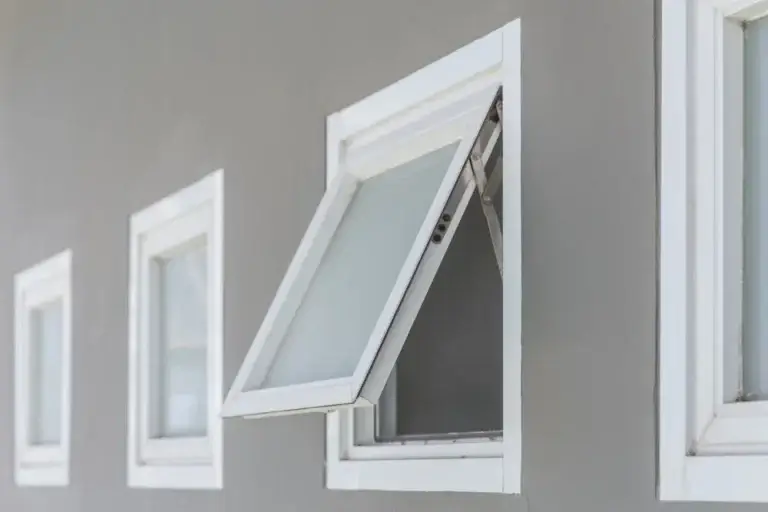
An awning window is a window hinged along the top of its frame, opened and closed with a hand crank that swings the bottom of the sash outward and down. It belongs to the same family as casement windows — both use a crank and seal by compression, pulling the sash tight against the frame on all four sides when locked — but an awning’s top hinge, rather than a side hinge, is what gives it its name and its distinct behavior.
Because the open sash tilts outward and down, it functions like a small awning over the opening, shedding rain and allowing airflow at the same time.
Awning Window vs. Hopper Window: Which One Do You Have?
Both are compact, crank-style windows that look nearly identical when closed, and both are common in basements and bathrooms. The difference is which way the sash moves:
| Awning | Hopper | |
|---|---|---|
| Hinge | Top | Bottom |
| Opens | Outward and down | Inward and down |
| Interior clearance needed | None | Yes — swings into the room |
| Rain-open? | Yes, sheds water outward | No — rain runs in along the tilted glass |
| Common use | Bathrooms, above sinks, high walls | Basements, tight interior layouts |
If your window swings out and away from the house when cranked open, it’s an awning window. If it tilts into the room, it’s a hopper window, and the buying advice on this page won’t fully apply — hopper windows have their own set of trade-offs around interior clearance and cleaning.
Awning vs. Casement vs. Sliding/Double-Hung Windows
Awning and casement windows share the same crank-and-compression hardware, but the hinge location changes performance — and both differ sharply from a track-based sliding or double-hung window.
| Feature | Awning | Casement | Sliding / Double-Hung |
|---|---|---|---|
| Hinge position | Top | Side | None (track-based) |
| Operation | Crank outward | Crank outward | Slide vertically or horizontally |
| Rain ventilation | Best — glass acts as an umbrella | Poor — sash catches rain | Poor — water can enter the track |
| Seal mechanism | Compression (airtight) | Compression (airtight) | Sliding weatherstripping |
| Egress capability | Rarely | Yes, when sized correctly | Yes, when sized correctly |
Can You Keep an Awning Window Open in the Rain?
Yes, for light rain. Water hits the angled glass and runs down and off the outer edge instead of toward the opening. Heavy, wind-driven rain is different — close the window at that point, the same as any operable window.
Do Awning Windows Work for Bathroom Privacy?
Yes, in two ways at once, which is why they’re the dominant window style for bathrooms specifically.
First, placement: awning windows are usually mounted higher on the wall than eye level, so there’s no direct sightline into the room even when the window is fully open.
Second, glass: most bathroom awning windows use frosted or obscure glass rather than clear glass. Frosted glass is sandblasted or acid-etched to a matte finish that blocks any view through it while still passing light. Obscure glass uses a molded texture (rain, reed, or similar patterns) that scatters the view without fully hiding it.
Either option lets a bathroom window stay clear glass on the frame edges but private in the center, and both hold up well to bathroom humidity since the privacy effect is built into the glass itself rather than a film or coating.
Are Awning Windows Secure for Basements?
Basement windows account for roughly 9% of home burglary entry points, mainly because they sit at or below ground level, are often out of sight from the street, and can be older units with weak locks. Awning windows are frequently the specific window style installed in basements, which puts this question directly in scope.
The design itself helps: a closed and locked awning window is difficult to force from outside, since the compression hardware pulls the sash tight at several points around the frame rather than relying on one latch. That said, security in a basement comes down to more than the window style:
- Choose tempered or laminated glass for basement units — it resists breaking on the first impact
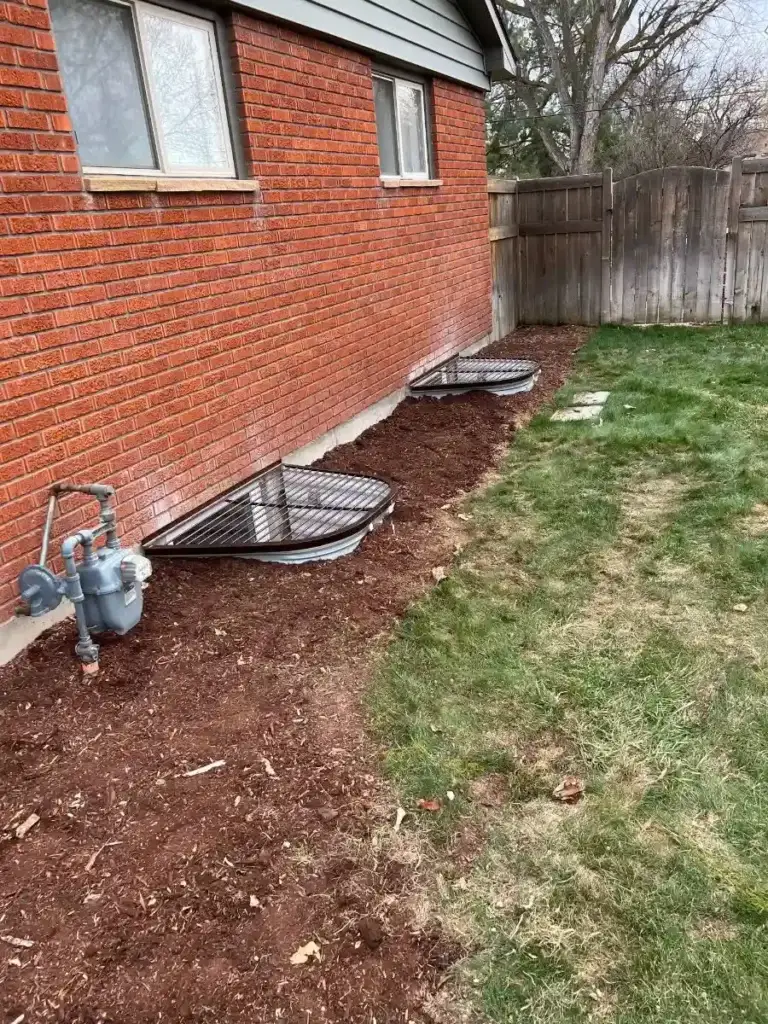
- Add a window well cover if the window sits below grade, which blocks easy access entirely
- Consider a glass-break sensor if you already have a home security system — inexpensive and easy to add to any window style
- Keep furniture and boxes away from directly underneath a basement window on the interior side, since a clear path in is what makes a break-in fast
How Much Do Awning Windows Cost in the Treasure Valley?
Most awning window projects run $475–$1,300+ per window installed. What moves a project within that range:
- Frame material: vinyl is more affordable; wood and fiberglass-clad cost more
- Glass package: standard Low-E/argon is the baseline; frosted, obscure, triple-pane, or specialty coatings add cost
- Size: awning windows run smaller than other types of windows on average, which helps per-unit cost
- Installation method: full-frame replacement costs more than a simple sash-and-frame swap
- Historic district rules: approved materials cost more than vinyl where vinyl isn't allowed
Where Do Awning Windows Work Best in a Home?
Awning windows solve specific placement problems rather than serving as a home’s main window style:
- Above kitchen sinks and counters — ventilation without a swinging sash eating counter space
- High on bathroom walls — steam ventilation with privacy handled by placement and frosted glass together
- Basements — light and airflow in non-bedroom basement space (see the egress section below for basement bedrooms)
- Paired with a large fixed picture window — a common combination that adds operable ventilation to an otherwise stationary wall of glass
Privacy on tighter lots: newer developments in Meridian, Star, and Southeast Boise often sit closer together than older Boise neighborhoods. A high-mounted awning window brings light and air to a side wall facing a neighbor’s window without an eye-level sightline either direction.
Less ideal spots: low eye-level placement in a walkway, or as a bedroom’s sole egress window.
Avoid low clearance zones. Don’t place an awning window low on a wall next to a narrow walkway, low deck, or porch seating area. Because the sash hinges at the top and swings out and down, an open awning window projects into the path of travel below it — a real head-strike hazard, and a window at risk of being bumped and cracked by anyone walking past.
Keep low-wall awning placements for spots with clear space in front of them, and reserve high-traffic walkway walls for a style that doesn’t project outward when open.
How Do Awning Windows Perform in Treasure Valley Weather?
Three local climate factors shape how an awning window performs here specifically:
Wind and the foothills. Boise’s adopted design wind speed is 90 mph (3-second gust), and real wind advisories regularly call for 40–45 mph gusts, hitting hardest in southeast Ada County and foothills-facing areas.
An awning sash tilts up and out at an angle when open, presenting less flat surface to a direct crosswind than a casement’s full broadside swing — a modest but real advantage on a home’s more exposed side.
Summer heat. Boise regularly tops 95°F in summer. A Low-E coating with argon gas fill reflects a meaningful share of solar heat back outside before it reaches the glass facing the room, limiting heat gain on west- and south-facing walls.
Winter inversions. The Treasure Valley traps cold, moisture-laden, often pollutant-heavy air at the valley floor during inversion season, frequently under near-zero wind for days at a stretch. Here, seal quality matters less for wind resistance and more for keeping that stagnant, low-quality air out entirely — something a compression seal does better than a sliding sash resting in a track.
Do Awning Windows Meet Ada County Egress Code?
Generally, no. Idaho’s IRC-based code requires every bedroom, including basement bedrooms, to have an emergency escape opening with a net clear opening of at least 5.7 sq. ft., minimum dimensions of 20″ wide by 24″ tall, and a sill no higher than 44″ off the floor.
Jurisdiction matters here. Homes in unincorporated Ada County (parts of Star, Eagle, and county land) fall under the Ada County Building Code, which adds its own window-well spec: at least 9 sq. ft. of area and a 36″ minimum projection from the house.
Homes inside Boise, Meridian, Star, or Eagle city limits are permitted through that city’s building department instead.
Why awning windows fall short: the open sash swings down and out, which can obstruct the very space someone needs to climb through, especially inside a below-grade window well. Use a casement or properly sized single-hung window for bedroom egress instead.
Full-Frame Awning Window Replacement
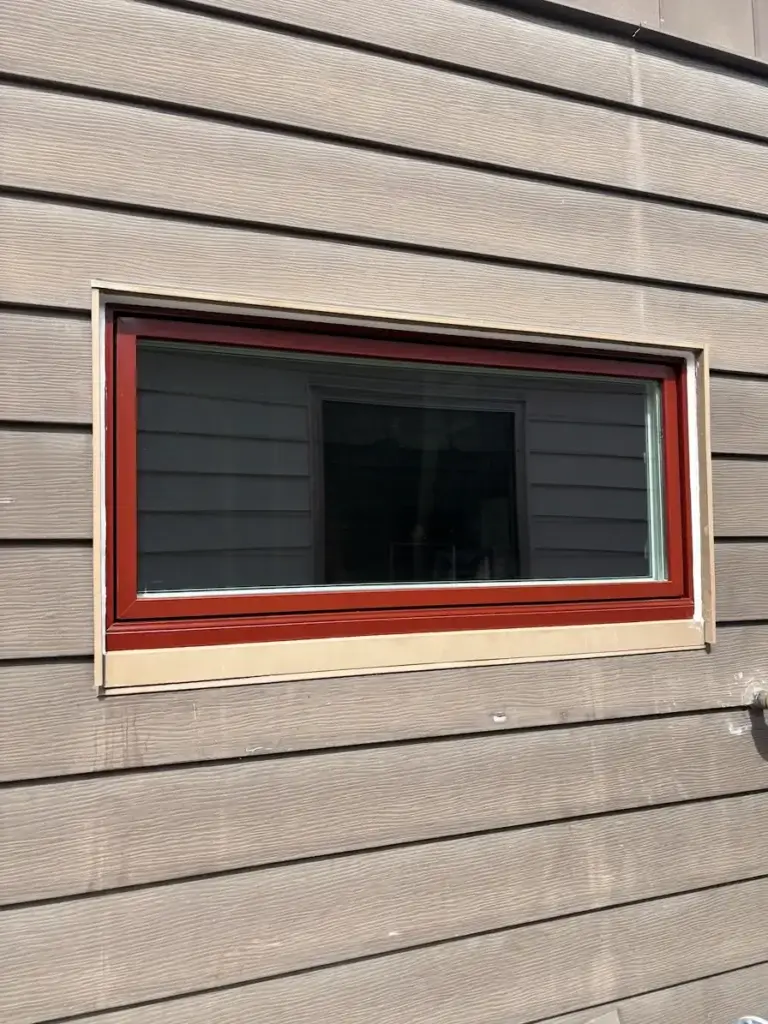
Full-frame replacement removes the entire existing window down to the rough opening, then builds the new awning window in from scratch. It’s the right approach when:
- The existing frame has rot, water damage, or soft/spongy wood — common in older Boise homes with original wood-frame windows
- The opening needs to be resized or converted to a different window style
- The frame is out of square, which can prevent an awning sash from compressing evenly and cause leaks
- You want the best possible long-term seal, since full-frame work exposes the flashing and insulation around the window itself
Older homes in Boise’s North End, Central Bench, and similar established neighborhoods more often need this approach, since decades of exposure can hide rot or moisture damage behind a normal-looking frame.
This is professional-only work. Full-frame replacement opens structural framing and typically requires a permit. A licensed, insured crew carries the liability for the structural repair and follows the correct flashing order — sill, then jambs, then head — to keep the wall from leaking behind the new window. It should never be attempted as a DIY project.
Can You Install Vinyl Awning Windows in a Boise Historic District?
No. Vinyl windows are banned in Boise’s North End, Harrison Boulevard, East End, and Hays Street historic districts. Replacing a window there requires a Certificate of Appropriateness from the Historic Preservation Commission and an approved material — typically wood, or a clad/composite product reviewed case by case. This adds both cost and a multi-week review timeline.
How Do You Maintain Awning Windows in Idaho's Climate?
Boise’s dry, dusty summers and freeze-thaw winters are hard on hinge and crank hardware specifically:
- Lubricate hinges and the crank mechanism once or twice a year — Boise's dry, dusty air accelerates hardware wear
- Check weatherstripping seasonally; a worn seal is the fastest way to lose the energy-efficiency advantage
- Inspect hinges for rust or looseness — they take more repeated stress than a casement's side hinges
- Clear dust from the frame and hinge area after Boise's dry, windy spring days
Talk to a Local Installer Before You Order
Wind exposure, inversion-season sealing, egress rules that shift depending on whether your address falls under Ada County or a city building department, and historic-district material rules are all address-specific. Boise Custom Windows & Doors offers free in-home consultations across Boise, Meridian, Eagle, Star, Kuna, and the rest of the Treasure Valley, with in-house, factory-certified installers and trusted brands like Pella and Marvin.

Get a free, no-pressure quote or call 208.920.1126 to talk through whether awning windows are the right fit for your home.
Frequently Asked Questions
How do you clean the exterior glass of an awning window?
Because the sash swings outward from the bottom, reaching the exterior glass from inside can be difficult on ground-floor installs and is often unsafe on a second story without detachable operator arms or exterior ladder access.
For second-story awning windows, either choose a model with a detachable operator arm designed for interior-side exterior cleaning, or plan on hiring a professional window cleaner rather than relying on ladder access.
How do I tell if I have an awning window or a hopper window?
Check which way it opens. An awning window swings out and away from the house from a top hinge. A hopper window tilts into the room from a bottom hinge. If it opens outward, it’s awning.
Can awning windows stay open in the rain?
Yes, in light rain — the angled sash sheds water outward. Close it if rain turns heavy or wind-driven.
Do awning windows come in frosted glass for bathrooms?
Yes. Frosted (sandblasted or acid-etched) and obscure (molded pattern) glass are both common options, and either works well for bathroom privacy without blocking light.
Are awning windows a security risk in a basement?
Not inherently — a closed, locked awning window’s compression seal is hard to force from outside. Basement windows in general are a common burglary entry point (roughly 9% of break-ins), so pairing any basement window with tempered glass, a window well cover, or a glass-break sensor is worth the extra step regardless of window style.
How much do awning windows cost in the Treasure Valley?
$475–$1,300+ per window installed, depending on material, glass, and installation method.
Can an awning window meet Ada County egress requirements?
Generally no. The open sash can block the clear opening needed for emergency egress, especially in a window well. Use a casement or properly sized single-hung window for a bedroom’s required egress opening instead.
Do awning windows help during Boise's winter inversions?
Indirectly. The compression seal limits infiltration of the cold, stagnant air that settles into the valley during inversion season, more than a loosely sealed sliding window would.
Do I need a permit for full-frame awning window replacement in Boise?
Usually yes, especially when the project involves resizing the opening or structural repair — and homes in a historic district need a Certificate of Appropriateness regardless of permit status.
Are there rebates for awning windows in Idaho right now?
The federal tax credit expired at the end of 2025. Idaho Power and Avista both currently offer utility-level rebates for qualifying windows — confirm current terms before ordering.