
Single Hung Windows in Boise
At a Glance
The basics
Only the bottom sash slides up. The top sash is fixed in place.
Single-hung vs. double-hung
Single-hung typically costs $50–$300 less per window. Double-hung opens at the top too and more often includes tilt-in cleaning.
Not a slider, not single-pane
"Single" means one moving sash. It doesn't describe sideways motion or the number of glass layers.
Energy
One moving sash means fewer sliding seals, a slight edge over double-hung. Glass, frame, and installation matter more than sash count.
Cleaning
Reaching the exterior glass from inside depends on a tilt-in sash. Not every single-hung has one.
Cost in Boise
Roughly $350–$800 per vinyl window installed.
Best placement
Ground-floor rooms, rooms with a second window for cross-breeze, and budget-driven whole-house projects.
Boise summer nights
Lower-sash-only opening lets cool air in but gives hot air no exit at the top. Pair it with a second opening.
Wildfire smoke
A fixed top sash removes one moving seal. Smoke protection still depends on the whole window, the install, and indoor filtration.
Egress
Only the lower sash counts toward the opening, so egress-rated units run large.
Kids and falls
The open lower sash sits at child height. Fall-protection rules apply to some upper-floor windows.
Older Boise ranch homes
Single-pane aluminum single-hungs conduct heat and cold and can sweat enough to damage trim.
Full-frame replacement
The right call for failed frames, hidden moisture damage, or old aluminum frames. Professional-only work.
Repair or replace
A sash that won't stay up is often a balance repair. A damaged frame points to replacement.
What Is a Single-Hung Window?
A single-hung window has two sashes stacked in one frame. The bottom sash slides up. The top sash does not move.
It’s the simpler cousin of the double-hung window, where both sashes slide. With only one moving sash, a single-hung window has fewer parts that can wear out.
The window opens to roughly half its height at most, since only the lower sash travels.
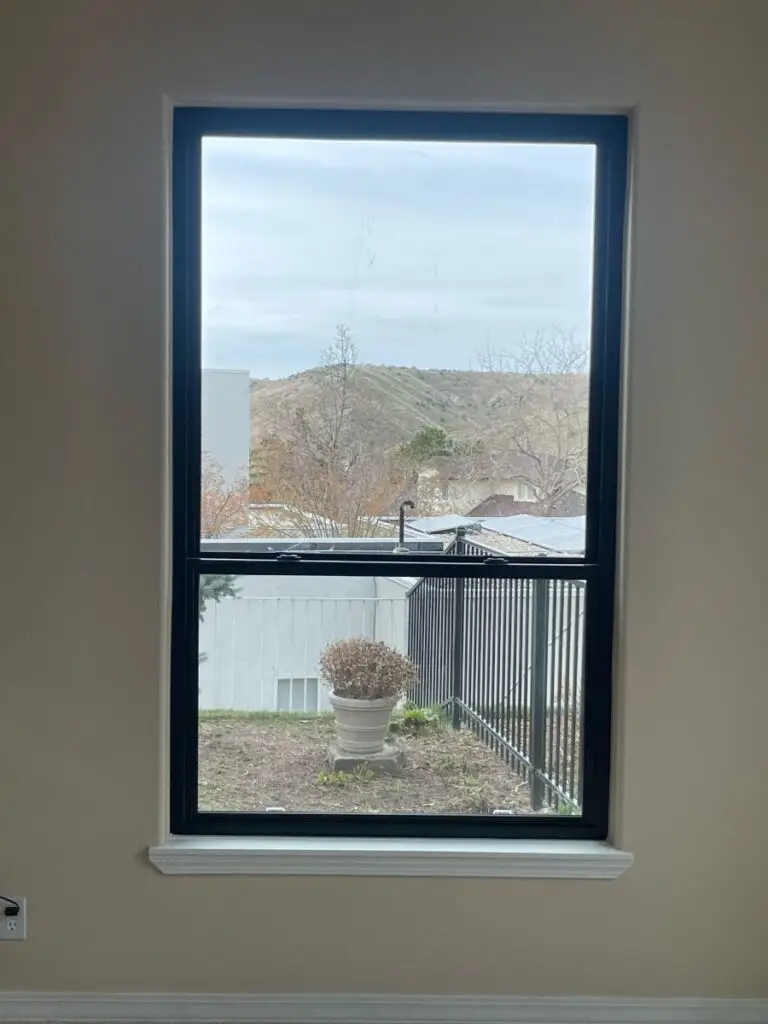
Single-Hung vs. Double-Hung Windows: What's the Difference?
The difference is one sash. That one change shifts price, ventilation, cleaning, and child safety.
| Single-hung | Double-hung | |
|---|---|---|
| Moving sashes | Bottom only | Top and bottom |
| Typical price | $50–$300 less per window | Higher |
| Ventilation | Bottom opening only | Top, bottom, or both |
| Tilt-in cleaning | Available on some models | More common |
| Open-window child safety | Lower sash must open | Can open the top sash only |
| Seals that move | Fewer | More |
Bottom line: single-hung is best for budget, simplicity, and ground-floor rooms. Double-hung is best for upper floors, top-down ventilation, and easier cleaning.
Is a Single-Hung Window the Same as a Sliding Window or a Single-Pane Window?
No. These three terms get mixed up, and each describes something different:
- Single-hung: one sash moves, and it moves vertically.
- Horizontal slider: a sash moves side to side. Sliders suit wide, low openings. Single-hungs suit taller ones.
- Single-pane: one layer of glass. A single-hung window can have double-pane or triple-pane glass. Most modern replacement units do.
When a quote says “single hung double pane,” it means one moving sash with two layers of glass.
Are Single-Hung Windows More Energy Efficient Than Double-Hung?
Slightly, in principle. A single-hung window has one moving sash, so it has fewer sliding seals where air can leak.
Energy-efficiency guidance puts hinged windows with compression seals at about half the air leakage of sliding-seal types like double-hung and horizontal sliders. It places single-hung somewhat better than double-hung because only one sash moves.
The gap is small. These matter more:
- Glass package: Low-E coating and gas fill
- Frame material: vinyl, fiberglass, or wood-clad
- Installation quality: how the frame is flashed, insulated, and sealed to the wall
Ask for the NFRC label on any window you consider. It prints the U-factor, solar heat gain, and air leakage on one sticker.
Can You Clean a Single-Hung Window From Inside?
Only if the window has a tilt-in sash. Not every single-hung window does.
On a tilt-in model, you release the tilt latches, swing the lower sash inward, and clean both faces of the glass from the room.
Without tilt latches, the exterior glass needs outside access. That’s easy on a ground floor. It’s a ladder job on a second story.
The fixed top sash adds a wrinkle. On some models you may be able to reach it through the opening once the lower sash tilts in. Check this before ordering windows for an upper floor.
A single-hung window with a tilt sash costs less than most double-hung models, so it’s a workable middle option.

How Much Do Single-Hung Windows Cost in Boise?
Vinyl single-hung windows run roughly $350–$800 per window installed in the Treasure Valley. Fiberglass and wood-clad frames cost more.
Here’s what moves a quote:
- Frame material: vinyl is the lowest cost; fiberglass and wood-clad cost more
- Glass package: double-pane Low-E is the baseline; triple-pane adds cost
- Size: larger openings and egress-sized units cost more
- Tilt-in sash: adds some cost over a fixed-lock model
- Installation method: full-frame replacement costs more than a simple sash swap
- Project size: ordering several windows together usually lowers the per-window price
Boise vinyl windows come in tiers. Builder-grade units sit at the low end. Welded-corner, multi-chamber vinyl sits higher.
Where Do Single-Hung Windows Work Best?
Single-hung windows fit rooms where simple operation and low cost matter more than top-down airflow:
- Ground-floor bedrooms and living rooms: exterior glass is reachable from outside
- Rooms with a second window: cross-breeze makes up for the single opening
- Rentals and whole-house budget projects: the price gap adds up across 10–20 windows
- Wide walls with several matching windows: a consistent, clean look
Less ideal spots:
- Upper-floor windows without a tilt-in sash
- Kids' rooms where you want fresh air without opening at floor height
- Any room that relies on a single window for ventilation
How Do Single-Hung Windows Handle Boise's Cool Summer Nights?
Boise’s July average high is about 92°F, with an average low near 62°F. As a high desert, the valley cools quickly after sunset. Opening windows at night is a real cooling strategy here.
A single-hung window only opens at the bottom. It lets cool air in but gives hot indoor air no exit near the ceiling.
You can work around this:
- Open the lower sash on the cool side of the house
- Open a window on the opposite side for cross-ventilation
- Open windows when the outdoor air drops below the indoor temperature
- Close everything in the morning to trap the cool air
A double-hung window can do this alone by opening both sashes. That’s the one place it clearly outperforms a single-hung window in this climate.
Do Single-Hung Windows Help Keep Out Wildfire Smoke?
They can help, but the window is only one part of the answer.
Smoke has pushed Treasure Valley air quality into unhealthy ranges repeatedly in recent summers, including in July 2026. Idaho health guidance during heavy smoke is to keep windows and doors shut, run a HEPA purifier or a MERV 13 filter, and set HVAC to recirculate.
A single-hung window has no moving seal at the top. That removes one possible leak path compared to double-hung. Three other things matter more:
- Weatherstripping condition: worn seals on older windows leak
- Frame-to-wall seal: gaps around the perimeter let smoke in even when the window is closed
- Indoor filtration: a window can't clean air that's already inside
New windows reduce infiltration. They don’t replace filtration.
Can a Single-Hung Window Be Used for Bedroom Egress?
Yes, but only in larger sizes. Only the lower sash opens, so only the lower sash counts toward the clear opening.
The code number is a net clear opening of at least 5.7 square feet, measured with the window fully open. That’s the actual hole you can climb through, not the glass size.
Two examples show the gap:
- A standard 24"×36" vinyl single-hung typically nets about 4.0–4.5 square feet. It fails.
- A 32"×54" single-hung often nets about 5.8–6.0 square feet. It can pass.
Egress-rated single-hung windows generally start around 32″×54″ to 36″×60″, depending on the model. Always check the manufacturer’s published net clear opening for the exact unit.
A casement reaches the same opening in a smaller wall space, which helps when the opening can’t grow.
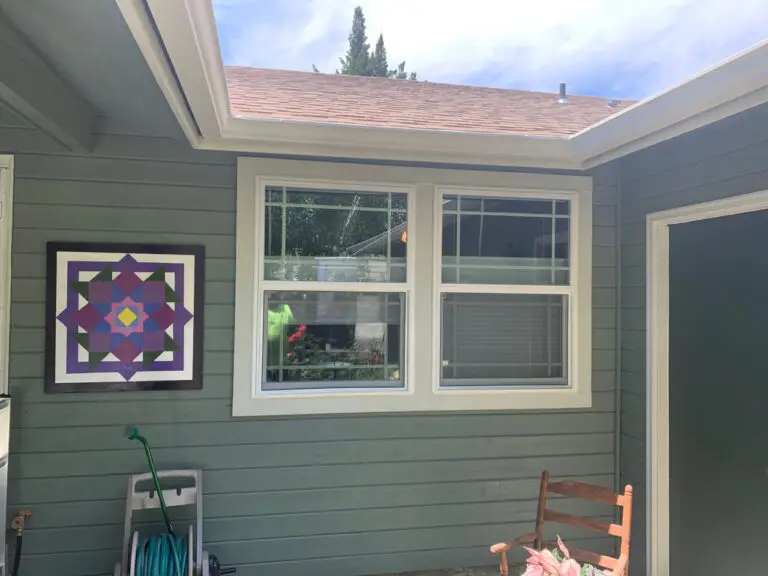
Are Single-Hung Windows Safe Around Kids? What Are the Fall-Protection Rules?
Single-hung windows have one weakness for small children. To get air, you have to open the lower sash, which creates an opening at low height. A double-hung window lets you open only the top sash.
Under the International Residential Code, window fall protection applies when both are true:
- The bottom of the operable opening is less than 24 inches above the floor
- The opening sits more than 72 inches above the ground outside
That generally means second-floor windows and higher.
A qualifying window must meet one of these:
- Opening limited so a 4-inch sphere can't pass through
- Equipped with a window opening control device that meets ASTM F2090
- Fitted with a compliant fall-prevention device
These devices reset when the sash closes and can be released from inside in an emergency. Idaho follows the IRC. Confirm the edition and any local amendments, and how they apply to replacement windows, with your building department.
Replacing Old Aluminum Single-Hung Windows in Boise Ranch Homes
Ranch homes built from the 1950s to the 1970s on the Bench, in Vista, and in Garden City often still have aluminum-frame, single-pane windows.
Aluminum conducts heat and cold directly through the frame. In cold weather that can cause condensation on interior surfaces, which over time can damage trim and drywall.

Signs these windows have reached the end of their service life:
- Water or frost on the frame in winter
- Stained or soft trim beneath the sill
- Locks that no longer catch
- Hot or cold frame surfaces you can feel from inside
- Glass that fogs between panes
Full-Frame Single-Hung Window Replacement
Full-frame replacement removes the entire existing window down to the rough opening — sash, frame, jambs, sill, and trim — then installs a new unit in a prepared opening.
It’s the right method when:
- The old frame is aluminum and is itself the thermal bridge
- Condensation or leaks have damaged the framing behind the trim
- The opening is out of square or the sill has sagged
- The existing frame has rot, warping, or failed fasteners
- You want to change the window size or position
Some sound frames can take a simpler sash-and-frame swap. A crew should inspect before deciding.
What a professional crew checks and does:
- Measures the true rough opening. Older homes often have non-standard sizes.
- Inspects the sill plate, studs, and header for moisture or pest damage
- Repairs framing and re-squares the opening
- Installs sill pan, jamb, and head flashing in the correct order
- Insulates and air-seals the gap around the new frame
- Reinstalls trim and matches the exterior finish
Full-frame replacement is professional-only work. It involves structural framing, flashing order, and air sealing that a homeowner can’t easily verify. Mistakes show up later as leaks and hidden rot.
Permits: In Boise, a like-for-like replacement with the same opening size and no structural change generally doesn’t require a City of Boise permit. Enlarging an opening or adding a window does. Confirm with your installer for your address.
Why Won't My Single-Hung Window Stay Up? Repair or Replace?
A sash that slides down on its own usually has a failed balance. That’s the spring or cord system that holds the sash’s weight. Another cause is a tilt pin that has popped out of its shoe.
Balance and tilt-pin repairs typically cost about $175–$615.
Repair makes sense when:
- The frame is solid and dry
- One part has failed, such as a balance, lock, or latch
- The window is otherwise in good shape
A stuck window may only be painted shut or swollen. Breaking the paint seal often frees it.
Replacement makes more sense when:
- The frame shows rot, warping, or water damage
- The glass is fogged between panes
- The same window has needed repeated repairs
- The frame is old aluminum with condensation problems
Talk to a Local Installer Before You Order
Window choice depends on the room, the floor, and the condition of what’s behind your old frame. Boise Custom Windows & Doors offers free in-home consultations across Boise, Meridian, Eagle, Nampa, Kuna, and the rest of the Treasure Valley. In-house, factory-certified installers handle the work. No subcontractors.
Get a free, no-pressure quote or call 208.920.1126 to talk through which windows fit your home.
Frequently Asked Questions
Is a single-hung window better than a double-hung window?
Neither is better in every case. Single-hung is best for lower cost and ground-floor rooms. Double-hung is best for upper floors, top-down ventilation, and easier cleaning.
Does a single-hung window open at the top?
No. The top sash is fixed. Only the bottom sash slides up.
What's the difference between a single-hung and a single-pane window?
Single-hung describes how the window opens: one moving sash. Single-pane describes the glass: one layer. A single-hung window can have double-pane or triple-pane glass.
Can I replace single-hung windows with double-hung windows?
Usually, yes. Both styles are made in the same standard sizes. Confirm with exact measurements, and consider whether you want the extra cost.
Are single-hung windows more secure than double-hung?
They have one less moving sash to secure, so there’s one less opening point. Lock quality and installation matter more than sash count.
How do you clean the outside of a single-hung window?
With a tilt-in sash, you can clean from inside. Without one, you need exterior access, usually a ladder on upper floors.
Can a single-hung window meet bedroom egress requirements?
Yes, in larger sizes. Egress-rated units generally start around 32″×54″ to 36″×60″. Check the manufacturer’s net clear opening for the specific model.
Do single-hung windows need fall protection?
Windows with a sill less than 24 inches above the floor and more than 72 inches above the ground outside generally need an opening limiter or fall-prevention device under the IRC. Confirm local requirements.
How much do single-hung windows cost in Boise?
Vinyl single-hung windows run roughly $350–$800 per window installed. Fiberglass and wood-clad cost more.
Do I need a permit to replace a single-hung window in Boise?
Like-for-like replacement with the same opening size and no structural change generally doesn’t need a City of Boise permit. Enlarging the opening or adding a window does.