
Picture Windows in Boise & the Treasure Valley
At a Glance
The basics
A picture window is one large fixed pane in a frame. It doesn't open.
Fresh air
Picture windows are paired with operable windows beside, below, or above them. Common pairings are flanking casements, double-hungs, or awnings.
Energy
No operable sash means fewer leak paths. A large glass area still means more heat gain and loss, so the glass package matters more here.
Cost in Boise
Standard-size vinyl runs about $300–$650 installed. Large and custom units cost more, and glass weight drives labor.
Safety glass
A large, low pane near a walking surface may require tempered glass. The rule applies when you replace an old window.
Foggy glass
If the frame is sound, replacing only the glass unit can cost far less than a new window.
Cracking
Large panes crack from uneven heating. Partial shade, tints, and films raise the risk.
Bay to picture
Converting means removing the projection, framing the wall flush, and patching the exterior.
Full-frame replacement
Right for failed frames, resizing, or a bay conversion. Professional-only work on heavy glass.
Egress
A picture window can't serve as a bedroom exit. It doesn't open.
Cleaning
The outside glass is out of reach from inside. Upper floors usually need a pro.
Timeline
Allow 2–4 weeks for custom glass, 4–6 weeks for triple-pane or specialty glass. Installing a single unit takes hours.
What Is a Picture Window?
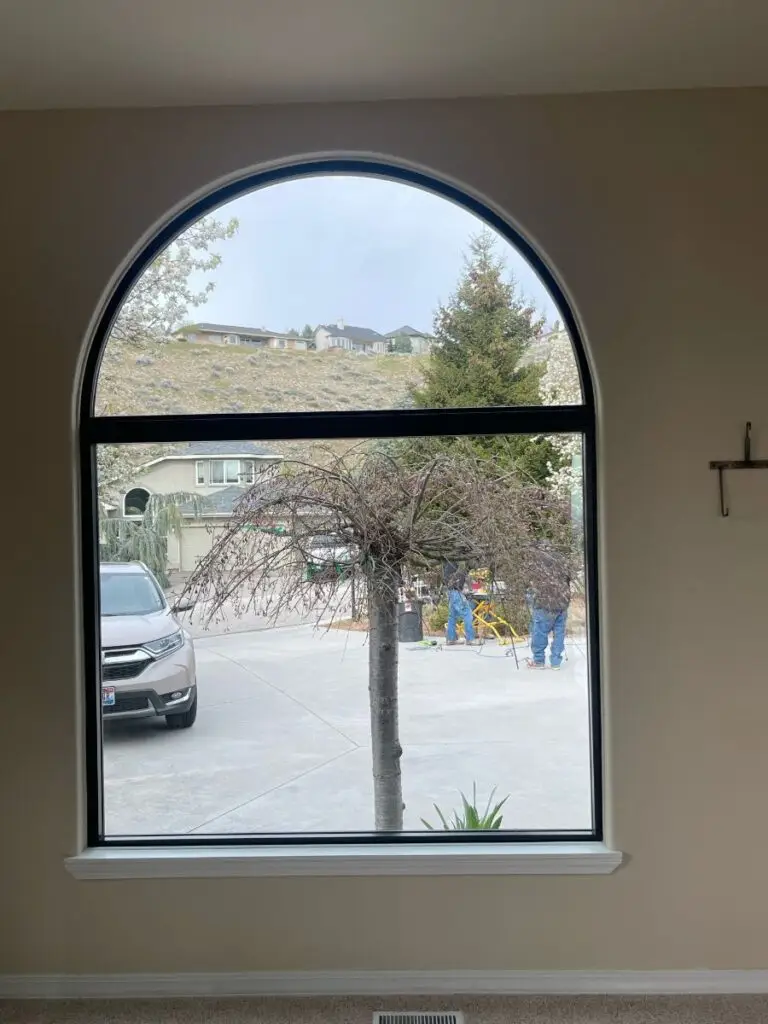
A picture window is a large pane of glass set in a frame that doesn’t open. It’s also called a fixed window.
It has no sash, hinges, crank, or lock. The glass is sealed into the frame, and that’s the whole unit. The name comes from the way it frames a view, like a picture on a wall.
In everyday use, “picture window” usually means a standard rectangle, while “fixed window” can also cover specialty shapes such as arches and trapezoids. Frames come in vinyl, fiberglass, wood, and aluminum, and the glass package matters more to performance than the frame material does.

How Is a Picture Window Different From a Casement, Double-Hung, or Sliding Window?
The difference is that a picture window doesn’t operate. That removes hardware that can wear out, and it removes ventilation.
| Picture | Casement | Double-hung | Slider | |
|---|---|---|---|---|
| Opens | No | Yes, outward | Yes, up and down | Yes, sideways |
| Provides ventilation | No | Yes | Yes | Yes |
| Counts as bedroom egress | No | Yes, when sized | Yes, when sized | Yes, when sized |
| Moving parts to wear out | None | Crank, hinges | Balances, tracks | Rollers, tracks |
| Screens needed | No | Yes | Yes | Yes |
| Typical size | Largest | Medium | Medium | Wide |
Because there’s no hardware, locks, or screens, a picture window often costs less than an operable window of the same size. The savings shrink as the glass gets bigger and the glass package gets better.
Can a Picture Window Open? How Do You Get Fresh Air Around One?
No. You get fresh air by pairing the picture window with windows that do open.
The standard layout is a center picture window flanked by a casement or double-hung on each side, which suits living rooms and great rooms. Another common choice puts awning windows below a large picture window, so you can ventilate even in light rain. A fixed transom can also sit above an operable window or door, and several windows can be joined into one mulled assembly.
Plan the operable windows at the same time as the picture window. Their size, hinge side, and screen placement affect both airflow and how the wall looks from the street.
Where Do Picture Windows Work Best in a Boise Home?
Picture windows are best for views, light, and rooms where ventilation comes from other windows.
In Boise, that usually means living and great rooms that face the Foothills, Bogus Basin, or the Owyhee Mountains. They also suit mid-century ranch homes, where large picture windows in the living and dining rooms are a signature feature. Contemporary and custom homes often go further, with floor-to-ceiling fixed glass in dark, slim frames. Homes with big views usually skip grids, so the glass reads as one clear pane.
Picture windows are a poor fit for rooms with no other operable window and for walls with a low sightline into a neighbor’s home. They’re also not a substitute for an escape window, but a bedroom can still have one. Codes typically require at least one qualifying opening per sleeping room, so a picture window can sit beside a casement that meets egress.

Are Picture Windows Energy Efficient in Boise?
They can be, with the right glass. A picture window is best for airtightness because it has no operable sash, which removes the weatherstripping joints where air usually leaks.
The trade-off is size. A large glass area gains and loses more heat than a small window, so the glass package decides performance. On the NFRC label, check the U-factor (how much heat passes through, where lower is better), the solar heat gain coefficient (how much sun heat enters), and the visible transmittance (how much light gets through).
One Boise installer suggests triple-pane glass for large picture windows and north-facing walls, and recommends fiberglass frames for large units. Triple-pane also helps comfort, because a large pane of cold glass in winter can leave a chilly zone near the window even when the room is heated. For foothill homes, ask for the unit’s design pressure rating, since large panes carry more wind load.
How Much Do Picture Windows Cost in Boise?
Standard-size picture windows run roughly $300–$650 each installed in vinyl. These are Boise installer pricing ranges:
| Frame | Standard-size picture window, installed |
|---|---|
| Vinyl | $300–$650 |
| Fiberglass | $550–$800 |
| Wood-clad | $700–$1,100 |
Large units cost more. For example, windows 5 feet by 5 feet and larger run about $1,000–$2,000 installed. Average price for windows is $600–$990, so treat every range as a starting point until your opening is measured.
Size is the biggest driver, because more glass means more weight and more labor. Glass weight, not frame size, usually sets the labor price on large units. Upgrades add to the total as well: triple-pane, laminated, tempered, or obscure glass all cost more, and so do custom shapes like arches and trapezoids. Full-frame installation adds roughly $150–$350 per window, and a second-floor or tight install may need extra crew or equipment.
Custom sizes are worth a second look. One installer guide puts custom units at 20–30% more than standard sizes, with 4–6 weeks of delivery. When a project is already full-frame, the crew can sometimes adjust the opening to fit a standard size, which can lower both cost and lead time.
Does a Picture Window Need Tempered Glass?
Sometimes. Large panes near walking surfaces often must be safety glass, meaning tempered or laminated. The rule is in the International Residential Code, which Idaho follows. Confirm the edition and local amendments with your building department.
A window pane counts as a hazardous location when all four of these are true:
- The pane is larger than 9 square feet
- The bottom edge is less than 18 inches above the floor
- The top edge is more than 36 inches above the floor
- A walking surface is within 36 inches of the glass
Safety glass is also required in other spots. That includes glass within 24 inches of a door when its bottom edge is under 60 inches from the floor, glass beside stairs and landings, and glass near tubs and showers.
The catch: an old picture window may be legal where it stands, but when you replace it, the new unit must meet current rules. That matters for 1950s–70s ranch homes with low, large picture windows beside patio doors or hallways.
Safety glass carries a permanent mark in the corner of the pane, and inspectors look for it. If your window falls in a hazardous location, confirm with your installer that the unit is ordered as safety glass before it’s manufactured, since the glass can’t be changed afterward.
Can You Replace Just the Glass in a Foggy Picture Window?
Often, yes, if the frame is sound. Fog between the panes means the sealed glass unit has failed. A glass-only replacement swaps that unit and keeps the frame.
Seals fail for several reasons: manufacturing defects, repeated heating and cooling, water getting in at the edge, and plain age. A failed unit has lost its insulating gas and performs closer to a single-pane window. Defogging services only clear the view for a while, so they’re a cosmetic fix, not a repair.
National guides put glass-only replacement at roughly $150–$600, depending on size and glass type, with large 48″×60″ units toward the top. That’s usually well below the cost of a new window, since the frame, trim, and flashing stay as they are. Check your warranty first: glass-unit seals are often covered for 10–20 years, and the manufacturer may pay for the replacement.
This works when the frame is dry, solid, and square and only the glass has failed. It doesn’t work when the frame has rot, warping, or water damage, because a new glass unit in a compromised frame is likely to fail early. If you also want to resize the opening, or several windows of the same age are failing, replacing the whole window makes more sense.
A new glass unit in a hazardous location must be safety glass. Large units are heavy, so expect two technicians.

Why Do Large Picture Windows Crack?
The usual cause is thermal stress. One part of the pane gets much hotter than another, and the glass can’t expand evenly, so a crack starts at the edge.
Large panes are more vulnerable because bigger glass builds bigger temperature differences. Partial shade from a tree, overhang, or deep frame shadow makes it worse. So do tints, some Low-E coatings, and dark films, which raise the glass temperature. Blinds or furniture placed close to the glass trap heat against one side, and a chipped edge gives a crack somewhere to start.
To lower the risk:
- Ask your installer which glass type suits the pane size and sun exposure
- Choose heat-strengthened or tempered glass where recommended
- Check your warranty before adding window film, since many manufacturers void coverage if film causes breakage
- Keep blinds and shades off the glass
Most thermal cracks aren’t a defect in the glass. They’re a response to conditions. Shade patterns change as trees grow, and cracks on newly installed windows are not unusual when part of the pane sits in shade, so a recent install may still be under warranty.
If a pane does crack, the crack can spread, especially in double-pane units. Epoxy fills are cosmetic and temporary. A cracked pane in a sealed unit usually means replacing the glass unit.
Can You Replace a Bay Window With a Picture Window?
Yes. Homeowners do it when a bay leaks, rots, or goes unused.
The conversion removes the projecting bay along with its seat board and small roof. The wall is then framed flush, the exterior cladding is patched and matched, the interior trim is finished, and a new picture window goes into the opening.
It often costs about as much as replacing the bay, because the cladding patch and structural work add up. Don’t count on it being the cheap option. Old bays are prone to leaks at the roof flashing, and installers sometimes find wet or rotted seat framing once the unit comes out, which can add repair cost. It’s also structural work, so confirm permit needs with your installer.
Full-Frame Picture Window Replacement
Full-frame replacement removes the whole window down to the rough opening — glass, frame, and trim — and installs a new unit with new flashing and insulation.
It’s the right method when the frame has rot, water damage, or soft spots, or when it has sagged under the weight of the glass. It’s also the method to use when flashing has failed and water has reached the framing, or when you’re resizing the opening or changing the layout, such as adding flanking casements or converting a bay.
Large openings put more load on the header and sill, so a crew inspects both and repairs framing before the new unit goes in. In practice, the crew:
- Measures the true opening, since older openings are rarely square
- Inspects the sill, header, and studs for moisture damage
- Sets a nailing-fin unit plumb and level, secured to the structure
- Flashes the sill, jambs, and head in order
- Insulates and air-seals the perimeter
- Reinstalls trim and matches the exterior finish
This is professional-only work. A large glass unit is heavy, fragile, and unforgiving. A pane that’s out of level can stress the seal, and poor flashing lets water in behind the wall. Measuring matters just as much: even a quarter-inch error on a custom unit can delay the install while a new one is made.
In Boise, a like-for-like replacement of the same size generally doesn’t need a City of Boise permit. Enlarging the opening or converting a bay does.
How Long Does Picture Window Replacement Take?
Most of the time is spent waiting for the glass. Installation itself is quick.
| Stage | Typical time |
|---|---|
| Custom glass, standard Low-E double-pane | 2–4 weeks |
| Triple-pane, specialty size, or obscure glass | 4–6 weeks |
| Installing one standard unit | A few hours |
| Full-frame install of a large unit | Up to a full day |
Custom or oversized glass, structural repair, or permits can push the full timeline to 10–12 weeks. Staying within standard sizes shortens lead time and lowers cost.
How Do You Clean the Outside of a Picture Window?
You usually can’t from inside. A picture window has no sash that tilts or swings in, so the outside glass needs outside access.
On the ground floor, a hose, squeegee, or extension pole works. On a second floor, a ladder is risky, so hire a pro for upper-floor units. Professionals often use pure-water systems that leave less mineral residue on the glass.
Sprinkler overspray leaves mineral spots on lower panes, and old deposits can etch the glass. Aim heads away from the window, and don’t pressure wash, which can push minerals deeper.

What Should You Ask an Installer Before Ordering a Picture Window?
Large glass units raise questions that standard windows don’t. Ask these before you sign:
- How many installers will be on site for the heavy glass?
- Is this a full-frame or an insert installation, and why?
- What's the lead time from order to install, and what could extend it?
- Does the warranty cover the frame and the glass seal separately?
- Is any pane in a safety-glass location, and is it ordered that way?
- What glass type and design pressure rating do you recommend for this size and exposure?
Talk to a Local Installer Before You Order
Picture windows depend on details a quote form can’t see: glass size, safety-glass rules, the condition of the frame, and the weight your wall has to carry. Boise Custom Windows & Doors offers free in-home consultations across Boise, Meridian, Eagle, Nampa, Kuna, and the rest of the Treasure Valley. In-house, factory-certified installers handle the work. No subcontractors.
Frequently Asked Questions
Can a picture window be opened?
No. A picture window is fixed, with no sash, hinge, or latch. Pair it with operable windows for ventilation, either beside it, below it, or above it.
Are picture windows more energy efficient than other windows?
They’re best for airtightness because there’s no operable sash, so there are fewer places for air to leak. Total performance still depends on the glass package, since large glass gains and loses more heat. Compare the U-factor and solar heat gain on the NFRC label.
How much do picture windows cost in Boise?
Standard-size vinyl runs roughly $300–$650 installed. Fiberglass runs $550–$800 and wood-clad $700–$1,100. Large and custom units cost more, and other Idaho sources list higher averages, so get a measured quote.
Are picture windows cheaper than other windows?
Often, at the same size, because there’s no hardware, lock, or screen. The gap closes on large units, where glass weight, triple-pane upgrades, and extra labor add cost.
Does my picture window need tempered glass?
If the pane is over 9 square feet, its bottom edge is under 18 inches from the floor, its top edge is over 36 inches, and a walking surface is within 36 inches, yes. Glass near doors, stairs, and tubs also needs safety glass. The rule applies to replacements, even if the old window wasn’t tempered.
Can I replace only the glass in a foggy picture window?
Often, if the frame is sound. Glass-only replacement costs much less than a new window, and your warranty may cover it. If the frame is damaged, replace the whole window.
Why did my picture window crack with no impact?
Usually thermal stress from uneven heating, often with partial shade, tint, or film. Check your warranty, and ask about heat-strengthened or tempered glass for the replacement.
Are picture windows secure?
Yes, in one respect: there’s no latch or sash to force. The glass is the weak point, and laminated or thicker glass is much harder to break than standard glass.
Can I replace a bay window with a picture window?
Yes. The bay is removed, the wall is framed flush, and the exterior is patched. It’s structural work and often costs about as much as replacing the bay.
Can a picture window be an egress window?
No. It doesn’t open. A bedroom can still have one, as long as another window in the room meets egress, such as a properly sized casement.
Do picture windows need screens?
No. They don’t open, so there’s nothing to screen.
Is a picture window the same as a fixed window?
Mostly. “Picture window” usually means a standard rectangle, while “fixed window” can also include arches, trapezoids, and other shapes.
How long does picture window replacement take?
Expect 2–6 weeks for the glass, then a few hours to a day to install. Custom sizes, structural repair, or permits can stretch the full timeline to 10–12 weeks.
Do I need a permit to replace a picture window in Boise?
Like-for-like replacement of the same size generally doesn’t need a City of Boise permit. Enlarging the opening or converting a bay does.