
Sliding Windows in Boise & the Treasure Valley
At a Glance
The basics
A sliding window has sashes that glide sideways along a track. It's also called a horizontal slider or glider.
How it's labeled
XO and OX describe a single slider, XX or XOX a double slider. The letters are read from outside the house.
Ventilation
Only about half the window opens, because one sash parks behind the other.
Egress
The half-open rule shrinks the clear opening. A slider has to be much larger than a casement to qualify as a bedroom exit.
Cost in Boise
Vinyl runs about $350–$750 installed. Fiberglass and wood-clad cost more, and wide three-panel units cost more again.
Sizes
Widths run 36–84 inches and heights 24–60 inches.
Sticking
Usually a dirty track or worn rollers, not a bad window. Cleaning and new rollers fix most cases.
Leaks
Water is meant to drain from the track through weep holes. Clogged holes and out-of-square installs cause most leaks.
Security
Older sliders can be lifted out of the track. Anti-lift screws, pin locks, and track bars close the gap.
Cleaning
The outside of a fixed half is reachable only with a ladder, unless the sash lifts out or tilts in.
Full-frame replacement
Right for corroded aluminum frames, out-of-square openings, and failed flashing. Professional-only work.
Best for
Wide, low openings, basements, and mid-century ranch homes.
What Is a Sliding Window?
A sliding window is a window whose sash moves sideways on a track instead of swinging or lifting. Rollers carry the sash along the bottom track, and a top channel keeps it upright.
It’s different from a sliding glass door. A slider window is mounted above the floor and sized for ventilation and light. A sliding glass door is a full-height door that serves as a walkway, and it’s a separate product with its own sizes and locks.
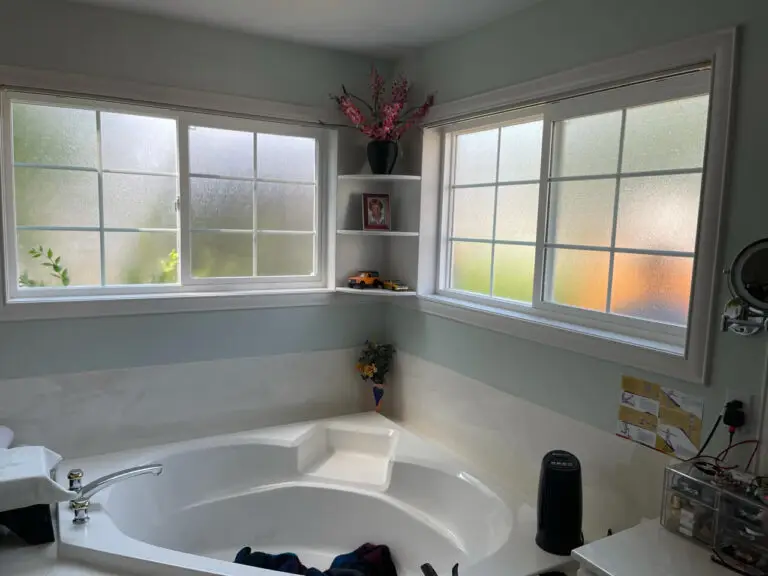
What Do XO, OX, XOX, and OXXO Mean on a Sliding Window?
These letters describe which panels move. X is a sash that slides, and O is a fixed pane. The letters are read from outside the house, looking at the window.
| Code | Layout | What moves |
|---|---|---|
| XO | One sliding sash on the left, one fixed on the right | Left sash |
| OX | One fixed on the left, one sliding on the right | Right sash |
| XX | Two sliding sashes | Either sash |
| XOX | Fixed center, sliding sash on each end | Both ends |
| OXO | Sliding center, fixed ends | Center |
| OXXO | Four panels, two sliding in the middle | The two center sashes |
The most common mistake is reading the layout from inside. A window that’s XO from the yard is OX from the living room. Stand outside and look before you order.
How Much of a Sliding Window Actually Opens?
About half. One sash has to park behind the other, so a 6-foot slider gives you about 3 feet of airflow.
A double slider lets you choose which side to open, but the total opening is still capped at one sash’s width. A casement of the same size opens its full width, which is why casements are the better pick when airflow matters more than cost.
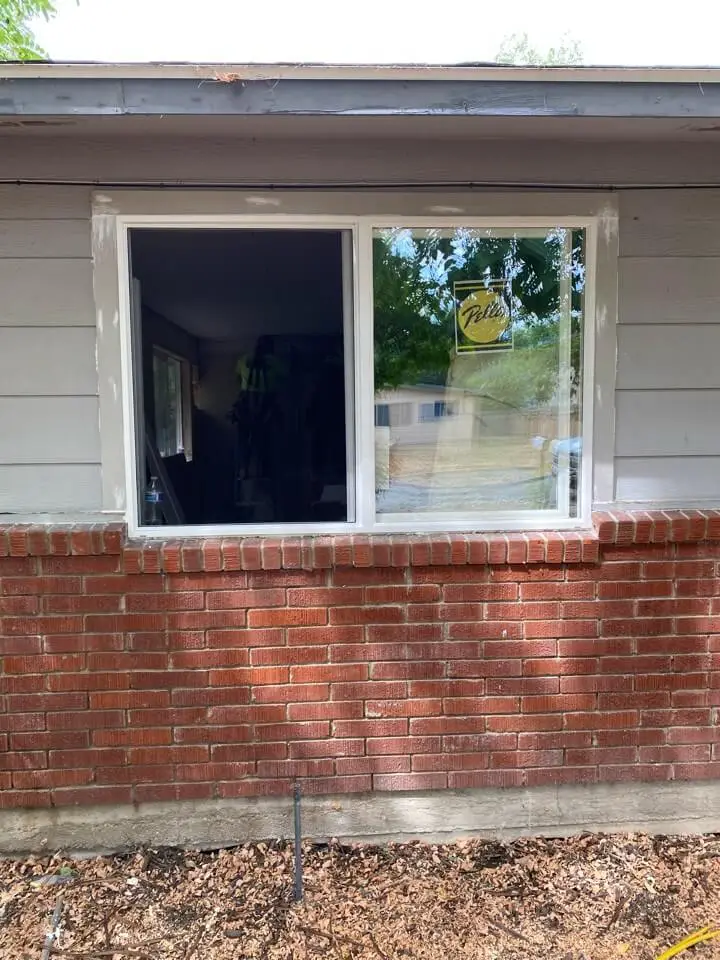
Where Do Sliding Windows Work Best in a Boise Home?
Sliding windows are best for wide, low openings where a sash can’t swing out or lift up. That makes them a common choice above kitchen sinks, in bathrooms, and in basements.
They also suit the horizontal lines of mid-century ranch homes, which are common across Boise and the Treasure Valley. Contemporary builds use them for the same reason. A wide slider keeps the horizontal proportions of the wall without needing the height of a double-hung.
Sliders are a weaker fit for tall, narrow openings and for rooms that depend on one window for airflow. They’re also not ideal where you want to open the whole window to the breeze.
Can a Sliding Window Be Used for Bedroom Egress?
Yes, but it has to be much larger than it looks. Egress is measured by the clear opening, and a slider opens only about half its width. A unit that appears plenty big can still fall short of the required 5.7 square feet.
For a slider to qualify, it generally needs to be roughly twice the overall size of a casement that nets the same opening. A wide double slider can pass where a tall, narrow one can’t.
Use the manufacturer’s numbers, not a tape measure on the glass. Spec sheets list which sizes meet the minimum clear opening of 24 inches high, 20 inches wide, and 5.7 square feet. Pella’s sheets, for example, mark egress-capable sizes with an “E.” Idaho follows the International Residential Code, so confirm the edition and local amendments with your building department.
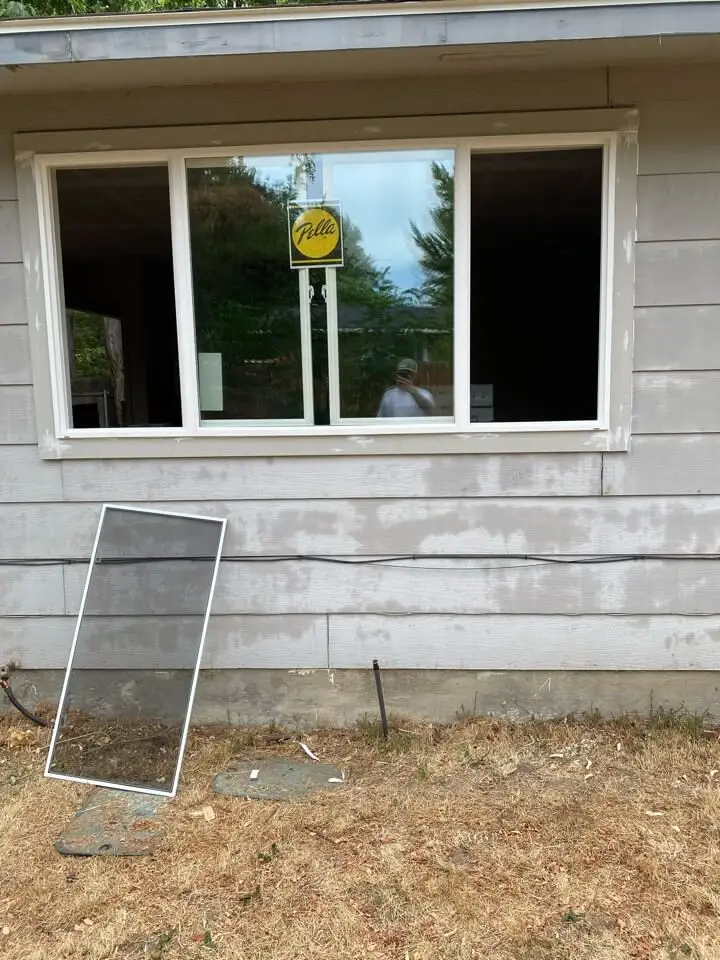
Boise installers use sliders in basement bedrooms because they can be sized to meet code while fitting a low, wide opening. If the opening has height to spare, a casement reaches the same clear area in a smaller frame.
One bedroom detail matters for security. Track blockers and pins in a sleeping room must be removable from the inside without tools, so they don’t trap someone in an emergency.
What Sizes Do Sliding Windows Come In?
Standard sliders run 36 to 84 inches wide and 24 to 60 inches tall. They’re built wider than tall, which is the opposite of most hung or casement windows.
| Typical size (W × H) | Common use |
|---|---|
| 36″ × 24″ | Basements, utility rooms, bathrooms |
| 48″ × 36″ | Kitchens, home offices |
| 60″ × 36″ | Kitchens, wide bedroom walls |
| 72″ × 48″ | Living rooms and bedrooms with wide openings |
Windows wider than about 8 feet are usually built as three-panel units with a fixed center and a sliding sash at each end. Staying with standard sizes keeps cost and lead time down.
How Much Do Sliding Windows Cost in Boise?
Vinyl sliding windows run roughly $350–$750 each installed in Boise. These are installer pricing ranges:
| Frame | Sliding window, installed |
|---|---|
| Vinyl | $350–$750 |
| Fiberglass | $550–$850 |
| Wood-clad | $750–$1,200 |
Some vinyl sliders start about $400–$700, so budget within that band and get a measured quote. Sliders usually cost less than casements, which run about $600–$1,050 in the same market.
Width raises the price faster than most other features. A three-panel unit costs more than a basic two-panel one, and a wide opening needs heavier glass and a stronger frame. Glass upgrades like triple-pane add cost, and full-frame installation adds roughly $150–$350 per window over a simple sash-and-frame swap.
Why Does My Sliding Window Stick, and Should I Repair or Replace It?
Most sticking is a track problem or a roller problem. It’s rarely a failure of the window itself.
The bottom track collects dust, grit, and debris. Boise’s summer wind carries fine dust off the Front, and it settles on tracks within weeks. Packed dirt makes the sash drag and jump. Cleaning the track and lubricating it with a silicone-based spray fixes many cases.
If the track is clean and the sash still drags, the rollers are the next suspect. Grit flattens the wheels or seizes the bearings, the sash sits out of true, and the lock no longer lines up with its keeper. Rollers are a small, inexpensive swap on a window in good condition.
Winter adds another cause. A clogged track holds water, and if it freezes the ice can jam the roller. On a brittle vinyl track, expanding ice can crack the channel.
Repair makes sense when only the rollers, lock, or weatherstripping are worn and the frame is dry and square. Replacement makes sense when the track is corroded or bent, the frame has water damage, the glass has fogged, or the window has needed repeated fixes. Old aluminum sliders are especially prone to corroded tracks.
Do Sliding Windows Leak Air and Water?
They can, and the causes are specific. Sliding weatherstripping tends to leak more than a casement’s compression gasket, so a slider relies on the seal pile, brush strips, and tight alignment.
Water is part of the design. Rain and condensation collect in the bottom track and drain out through small weep holes. When dirt blocks those holes, water backs up and can reach the sill and framing. Keep the holes clear, and check them after wind-heavy spring days.
Most water leaks trace back to installation. One guide calls improper installation the most common cause of leaks. A slider set out of square binds, drags, and lets water past the flashing. If a new slider leaks, check that the frame is square in the opening and that the sill pan flashing is intact.
Are Sliding Windows Secure?
They’re secure when they’re locked, and when the sash can’t be lifted out. Older sliders can sometimes be lifted up and out of the track from outside, which bypasses the latch entirely.
Test yours. Lift the closed sash. If it moves, add an anti-lift screw set in the upper track with a hair’s clearance, or a pin lock that passes through both sashes. A track bar or dowel in the bottom track stops the sash from sliding open. Many sliders also have a vent lock that lets the window open about 2 inches and hold there.
Layering works best, so pair a pin or bar with the factory latch. In a bedroom, make sure any blocker comes out from the inside without tools.
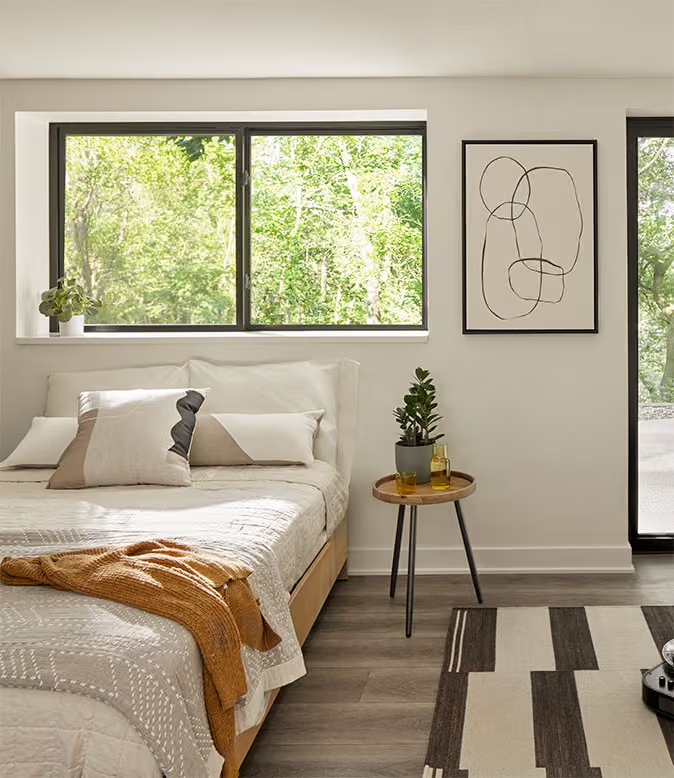
How Do You Clean a Sliding Window?
It depends on the model. Some double sliders have sashes that lift out or tilt in, which lets you clean both sides from inside.
On a single slider, the fixed half can only be cleaned on the outside from a ladder. That’s easy on a ground floor and a hazard on an upper one. If you’re buying for a second story, ask for a lift-out or tilt-in sash.
The track needs its own cleaning. Vacuum it, wipe it, and lubricate the rollers every year or two.
Full-Frame Sliding Window Replacement
Full-frame replacement removes the entire window down to the rough opening — sash, frame, track, and trim — and installs a new unit with new flashing and insulation.
It’s the right method when the old frame is corroded aluminum, when the opening is out of square, or when flashing has failed and water has reached the framing. It’s also how you change the layout, such as swapping a slider for a casement to gain egress or airflow.
A slider is sensitive to the opening. If the frame sits out of square, the sash binds and the track sheds water poorly. A crew corrects the opening and sets the new unit plumb and level, flashes the sill, jambs, and head in order, then insulates, seals, and re-trims.
In mid-century ranch homes, the original sliders often sit in wide openings with aluminum frames and corroded tracks. Those are good candidates for a full-frame swap, because the crew can inspect the framing behind the old frame before closing it up.
Full-frame replacement is professional-only work. It involves structural framing, flashing order, and keeping a wide unit square. Expect it to take longer than a simple swap, and plan for a few hours per opening.
In Boise, a like-for-like replacement of the same size generally doesn’t need a City of Boise permit. Enlarging an opening or converting a window to egress does.
Talk to a Local Installer Before You Order
Sliding windows come down to details a quote form can’t see: which way the sash should open, the clear opening for a bedroom, and what the old frame has been hiding. Boise Custom Windows & Doors offers free in-home consultations across Boise, Meridian, Eagle, Nampa, Kuna, and the rest of the Treasure Valley. In-house, factory-certified installers handle the work. No subcontractors.
Frequently Asked Questions
What does XO mean on a sliding window?
X is the sliding sash and O is the fixed pane, read from outside the house. An XO window has the sliding sash on the left, and an OX window has it on the right. Check from outside before you order so the sash opens the direction you expect.
How much of a sliding window opens?
About half. One sash parks behind the other, so a 6-foot slider opens about 3 feet. That limit applies to both ventilation and egress, which is why sliders need to be larger than casements to match their clear opening.
Can a sliding window be an egress window?
Yes, if it’s large enough. Because only half the width opens, a unit that looks big can still miss the 5.7-square-foot requirement. Use the manufacturer’s spec sheet to confirm egress-capable sizes, and consider a casement if the opening is tight.
How much do sliding windows cost in Boise?
Vinyl runs roughly $350–$750 installed, fiberglass $550–$850, and wood-clad $750–$1,200. Wider, three-panel units cost more, and full-frame installation adds roughly $150–$350 per window.
Why won't my sliding window slide?
Usually a dirty track or worn rollers. Clean the track, lubricate it with silicone spray, and replace flat or seized rollers. If the track is corroded or bent, or the frame has water damage, replacement is more cost-effective.
Why does my sliding window leak?
Common causes are clogged weep holes, worn weatherstripping, a frame that’s out of square, and failed flashing. Clear the weep holes first. If water persists, have the install checked.
Are sliding windows secure?
They are when locked and fitted with an anti-lift screw or pin lock, since older sliders can be lifted out of the track. A track bar adds a second barrier. In bedrooms, any blocking device must be removable from inside.
Are sliding windows energy efficient?
Quality sliders with Low-E glass perform well, but the sliding seals leak more than a casement’s compression seal. Compare the U-factor and air-leakage numbers on the NFRC label rather than relying on the style alone.
Can I replace a sliding window with a casement?
Yes. Casements open fully and net a larger clear opening, which helps for ventilation and egress. The new unit needs a different frame size, so a full-frame replacement is usually the right method.
Is a sliding window the same as a sliding glass door?
No. A slider window is mounted above the floor for light and air. A sliding glass door is a full-height door for passage, with its own sizes, locks, and threshold.
How do I clean the outside of a single slider?
The fixed half needs outside access, usually a ladder. A double slider with lift-out or tilt-in sashes can be cleaned from inside, which matters on upper floors.
Do I need a permit to replace a sliding window in Boise?
Like-for-like replacement of the same size generally doesn’t need a City of Boise permit. Enlarging the opening or converting it for egress does.