
Full-Frame Window Replacement in Boise
At a Glance
What it is
Full-frame replacement removes the entire window down to the rough opening — sash, frame, jambs, sill, and usually trim — then installs a new unit with new flashing and insulation.
How it differs from an insert
An insert drops a new window into the old frame. Full-frame replaces the frame too, so the crew can see and repair what's behind it.
When you need it
Rot, water damage, a frame that's out of square or sagging, aluminum frames, a size or style change, or a window that still leaks after new weatherstripping.
Cost in Boise
Local guides put it at roughly $650–$1,800 per window installed. One Boise guide says it adds 20–40% over a simple swap.
Hidden damage
Framing repairs found at tear-out are usually priced separately. Ask how they're handled before you sign.
Permits
Like-for-like replacement in the same opening is generally exempt in Boise. Changing the opening, header, or egress size triggers a permit.
Pre-1978 homes
Window replacement falls under the EPA's lead-safe rule. The contractor must be an EPA Lead-Safe Certified firm.
Flashing
Water management is the part that makes or breaks the job. Sill pan first, then jambs, then head.
Time
Allow 3–8 weeks for the windows to arrive. Installation runs about 2–4 hours per opening, and many whole-house jobs finish in 1–3 days.
Winter
It can be done, with cold-rated sealant and foam and one opening exposed at a time.
Hiring
Idaho requires contractor registration, not a trade license, for projects of $2,000 or more. Verify it at dopl.idaho.gov.
DIY
Not recommended. It involves structure, flashing sequence, and, in older homes, lead-safe work practices.
Is Full-Frame Window Replacement Right for Your Home?
What Is Full-Frame Window Replacement?
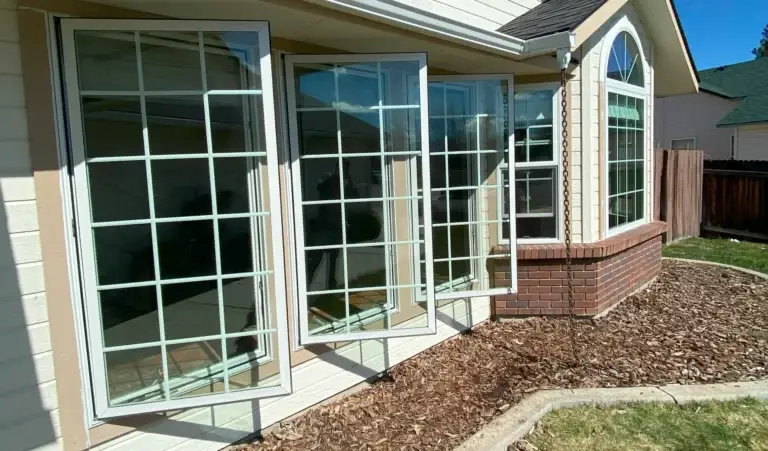
Full-frame window replacement removes the whole window assembly from the wall. That includes the sash, the frame, the jambs, the sill, and usually the interior and exterior trim. The crew works down to the rough opening, which is the bare framed hole in the wall.
A new window is then built into that opening with new flashing, insulation, and trim. You’re replacing the window and the system around it, not just the part that moves.
Installers also call it a “new-construction” or “nail-fin” installation. The new unit is fastened through its flange into the wall, the same way windows are set in a new house.
How Is Full-Frame Replacement Different From an Insert (Pocket) Replacement?
An insert replacement keeps the old frame and trim in place and fits a new window inside it. Full-frame removes the old frame entirely.
| Full-frame | Insert (pocket) | |
|---|---|---|
| What comes out | Sash, frame, jambs, sill, trim | Sash and hardware only |
| Can the crew inspect framing? | Yes, at every opening | No |
| Glass area | Full opening retained | Roughly half an inch lost per edge |
| Size or style change | Possible | Limited to the existing frame |
| Typical time per window | Several hours | Often under an hour |
| Cost | Higher; commonly 25–50% more, and up to double in some guides | Lower |
| Long-term performance | Depends on the new flashing and insulation | Limited by the condition of the old frame |
Neither method is wrong in every case. An insert can be reasonable when the existing frame is young, dry, square, and sound. The problems start when an insert goes over a frame that isn’t.
When Do You Actually Need Full-Frame Replacement?
You need it when the old frame can’t be trusted to hold a new window. That usually comes down to damage, geometry, or a change you want to make.
Full-frame is the right method when:
- The frame, sill, or trim is rotted, soft, or swollen
- Water stains or peeling paint show moisture has been getting in
- The opening is out of square, or the frame has sagged
- The old frame is aluminum, which conducts heat and cold through the frame itself
- You're resizing the opening, changing window style, or adding a window
- Drafts or leaks persist after new weatherstripping and caulk
- The frame is more than about 15 years old and the glass is failing
Homes built from the 1980s through the 2000s with older vinyl or aluminum windows often fall in this group. So do older wood-frame homes with decades of moisture exposure.
It also pairs well with other exterior work. If you’re re-siding or re-stuccoing, the trim is already coming off and the openings are already exposed. Doing full-frame windows at the same time costs much less than doing them as a standalone job later.
How Can You Check a Window Frame for Hidden Damage?
You can screen for it yourself, though only a crew can confirm what’s inside the wall.
Press a screwdriver or awl into the wood at the bottom corners of the frame and the sill. Sound wood resists. Rotted wood gives way or crumbles.
Then look for stains or discoloration below the sill or on the drywall under the window, and for bubbling or peeling paint on the trim. A musty smell near the window, a frame that has pulled away from the wall, uneven gaps around the sash, or condensation that keeps returning are also warning signs.
Hidden damage is common because a frame can look fine from both sides while the sill pan area is wet. That’s the main reason full-frame includes an inspection of every opening.
Full-Frame Window Replacement Cost and Quotes in Boise
How Much Does Full-Frame Window Replacement Cost in Boise?
Boise installer guides put full-frame replacement at roughly $650 to $1,800 per window installed. The guides don’t agree exactly, because they assume different window quality, sizes, and scopes.
| Item | Typical Boise range |
|---|---|
| Full-frame, standard window, installed | $650–$1,800 per window |
| Insert, standard window, for comparison | $450–$1,000 per window |
| Full-frame premium over a simple swap | About 20–40% in one Boise guide |
| Large picture or specialty window, full-frame | $1,800–$3,500+ |
| Typical 10-window home, full-frame | About $8,000–$16,000 |
Quality vinyl sits at the lower end. Fiberglass and clad-wood sit at the upper end. Nationally, guides put an insert at 25–50% less than full-frame, with some showing full-frame at up to double.
The extra cost goes to specific things. Labor is the largest: more demolition, framing work, and finish work per opening. Materials add the sill pan, flashing tape, foam or backer rod, and sealants, plus new interior casing and exterior trim. Exterior finish repair on siding, stucco, or brick, and hauling away old frames and debris, round it out.
What Hidden Costs Can Show Up During Full-Frame Replacement?
The main one is framing damage found at tear-out. Rot at a sill, a damaged header, or pest damage can’t be priced until the wall is open. Installers typically list it as a separate line item.
Ask three things before you sign:
- Is there an allowance for framing repair, or is it priced per repair?
- Who approves the extra cost before the work happens, and how?
- What is the unit price for typical repairs, such as replacing a sill plate section?
Other costs worth asking about include interior painting after trim goes back on, exterior finish matching on stucco or siding, and permit fees. Custom-size or specialty windows can also add weeks of lead time, and a measuring error can add more.
Is Full-Frame Replacement Worth the Extra Cost?
It’s worth it when the frame is compromised or when you plan to stay in the home for a long time. It’s harder to justify when the frame is young, dry, and square.
The case for full-frame is that it lets a crew inspect the framing, fix damage, and build a new water-management system around the window. An insert over a damaged frame can trap the problem and fail early. Installer guides also cite longer service life for full-frame, often 20–40 years, because it isn’t limited by the old frame.
The case against is cost and disruption, plus the fact that it doesn’t make sense if the home will be sold soon. Insert installs usually take less time and leave the existing trim in place.
A useful rule of thumb: the older the frame, the stronger the case for full-frame. Under about ten years and sound, an insert is defensible. Past fifteen, you risk buying a new window and inheriting a frame that wears out before the glass does.

What Should a Full-Frame Quote Include?
A good quote states the method, the performance numbers, and the details that decide whether the job holds. Look for these items in writing:
- The installation method, stated as full-frame
- U-factor and solar heat gain listed for each window
- The flashing and sealing method described
- Insulation at the rough opening specified
- Interior trim and paint, and exterior finish work, stated as included or not
- Haul-away and cleanup included
- How framing repairs are priced and approved
- Who pulls the permit
- Lead-safe work practices, if the home was built before 1978
- A warranty broken out by glass, frame, and labor
Vague quotes are the ones that grow later. If a line says only “install windows,” ask what it covers.
Before Work Starts: Permits, Energy Code, Lead Safety, and Installer Checks
Do You Need a Permit for Full-Frame Window Replacement in Boise?
It depends on what changes. Like-for-like replacement in the same opening, with no change to size or structure, is generally exempt in Boise.
A permit is typically required when the work changes the framed opening or its size, involves header or structural work, or changes the egress size of a bedroom window.
The City of Boise’s Planning and Development Services handles permits inside city limits. Ada County Development Services handles homes outside city limits. Always confirm for your address, and put in the contract who pulls the permit and who schedules any inspection.
Bedroom windows have to meet current egress requirements if the opening is enlarged or the window is replaced as part of a remodel.
What Performance Ratings Should Replacement Windows Have in Boise?
Look for the NFRC label on each window. It lists the U-factor (heat loss), solar heat gain coefficient, and air leakage.
Idaho has adopted the 2018 International Energy Conservation Code with amendments. For Climate Zone 5, which covers Boise, the amended table sets a maximum fenestration U-factor of 0.32 for new construction and additions, and Idaho’s code limits window air leakage to 0.3 cfm per square foot. Replacement windows in existing homes are generally treated more leniently, so confirm how the rules apply to your project.
In practice, Boise installers generally target a whole-window U-factor of 0.30 or lower. ENERGY STAR criteria for Idaho run from 0.30 down to 0.27, depending on the zone. Solar heat gain matters more on west- and south-facing walls.
Does Your Home Need Lead-Safe Work? What the EPA Rule Requires
If your home was built before 1978, yes. The EPA’s Renovation, Repair and Painting (RRP) rule requires paid contractors to be EPA Lead-Safe Certified and to use lead-safe work practices. Window replacement is specifically treated as covered work, because removing frames and trim disturbs painted surfaces.
Before work starts, the contractor must give you EPA’s Renovate Right pamphlet. During work, the crew uses containment and dust control. Afterward, cleaning verification is required, and the firm must keep records.
Idaho is covered by EPA’s federal program, and EPA has taken enforcement action against dozens of Idaho, Oregon, and Washington renovators for violations. Check any contractor in EPA’s online Lead-Safe Certified firm search before signing. The rule applies to paid contractors, but the dust hazard is the same whoever does the work.
How Do You Vet a Full-Frame Window Installer in Idaho?
Start with registration. Idaho requires contractors to register with the Idaho Contractors Board, part of the Division of Occupational and Professional Licenses, for projects of $2,000 or more in labor and materials.
Registration isn’t a competency license. It confirms the contractor is in the state system and carries required insurance. You can verify it for free at dopl.idaho.gov by searching the contractor’s name or registration number. Make sure the business name on the record matches your contract.
Then ask these questions:
- Are the installers employees, or subcontractors?
- What is the flashing method, and does it follow ASTM E2112?
- How are hidden framing repairs priced and approved?
- Who handles interior and exterior finishing?
- What does the written warranty cover for the glass, the frame, and the labor?
- Can you see recent full-frame jobs, ideally on homes like yours?
How a Full-Frame Window Installation Works
What Happens During a Full-Frame Window Replacement, Step by Step?
A full-frame installation follows a sequence. Each step protects the next.
| Step | What happens | Why it matters |
|---|---|---|
| 1. Protect and prepare | Crew covers floors and furniture and clears the work area | Limits dust and damage inside the home |
| 2. Remove trim and old unit | Interior casing, sash, frame, jambs, and sill come out to the rough opening | Exposes the framing for inspection |
| 3. Inspect the opening | Crew checks the sill plate, jack studs, and header for moisture or pest damage | Finds hidden problems before they’re sealed in |
| 4. Repair and square | Damaged framing is replaced, and the opening is made plumb and level | A square opening lets the window operate and seal |
| 5. Flash the sill | A sloped sill pan with a back dam and end dams goes in first | Catches water that gets past the window and drains it out |
| 6. Set and fasten | The new unit is set, shimmed plumb and level, and fastened through its flange | Keeps the window square under wind and temperature swings |
| 7. Flash jambs and head | Jamb flashing laps over the sill pan, then head flashing laps over the jambs | Shingle-style layers shed water outward |
| 8. Insulate and air-seal | The gap around the frame is filled with low-expansion foam or backer rod and sealed | Stops drafts and condensation at the perimeter |
| 9. Trim and finish | Interior casing and exterior trim go back on, and finishes are patched | Completes the opening and hides the work |
| 10. Test and clean up | Crew checks operation and locks, then removes debris | Confirms the unit works before the crew leaves |
Why Is Flashing the Most Important Part of Full-Frame Installation?
Because water that gets behind a window does damage out of sight. Most leaks around new windows trace to flashing, not to the window itself.
The building code requires openings in exterior walls to be flashed. The industry standard for the details is ASTM E2112, which most jurisdictions reference. Installers follow it to build a continuous drainage plane around the opening.
The rule is to work from the bottom up. The sill pan goes in first. The jamb flashing laps over the pan. The head flashing laps over the jambs. The house wrap then laps back over the head flashing. Every layer sheds water onto the one below it, so water always travels out and down.
A sill pan has three jobs: a continuous surface without holes or wrinkles, a positive slope toward the exterior, and upturned back and end dams that keep water from running into the wall.
Common failures are easy to name. A skipped sill pan leaves water on the sill with nowhere to go but into the framing. A reverse lap, where upper layers tuck behind lower ones, sends water inward. Other repeat offenders are caulk used in place of flashing, head flashing installed before jamb flashing, and flashing tape applied after the window is already set. Each one breaks the shingle sequence.
Building-science guidance from HUD, as summarized by installers, lists window flashing as the most common flashing code violation reported by code officials. This is why the method is worth asking about in the quote.
How Long Does Full-Frame Window Replacement Take?
Most of the time is waiting for the windows. The installation itself is short.
| Stage | Typical time |
|---|---|
| In-home measurement and quote | Same day to about a week |
| Manufacturing and delivery | 3–8 weeks, depending on brand and options |
| Permit, if needed | Varies by project and jurisdiction |
| Installation per opening | About 2–4 hours |
| Whole-house installation | Often 1–3 days |
| Finish work, if scheduled separately | Same day or a follow-up visit |
Custom sizes, specialty shapes, and triple-pane or specialty glass add lead time. Staying within standard sizes shortens it.
Can You Replace Windows in Winter in Boise?
Yes. Crews do it with a few adjustments.
They remove only one opening at a time and keep it exposed for a short period. They close off the room being worked on, and they use sealants and foam rated for cold weather. Standard exterior caulk often has a minimum application temperature near 40°F, so cold-rated products matter.
Cold also needs attention to the surfaces. Frost on the frame prevents sealant from bonding, so the crew clears it first. Installers may pause for severe weather, snow, or wind.
If your window has failed in January, there’s usually no reason to wait until spring. Ask your installer which products they use and what temperature limits apply.
What Finishing Work Comes With Full-Frame Replacement?
Full-frame replacement disturbs the finishes around the window, so the finish work is part of the job.
Inside, the interior casing is reinstalled or replaced. Minor patching and repainting of the wall near the window may be needed. Ask whether painting is included.
Outside, the exterior trim and cladding are cut back and restored. On wood or fiber-cement siding, that’s usually straightforward. On stucco, the crew cuts back stucco around the opening and patches and matches it afterward. On brick, the masonry opening is fixed, so the work centers on the frame, brick mold, and flashing inside it.
After a Full-Frame Window Installation: Warranty and Inspection
What Warranty Applies After a Full-Frame Replacement?
Two warranties apply, and they cover different things. The manufacturer covers the product, usually the glass seal and the frame. The installer covers the workmanship, including flashing and leaks.
Get both in writing, and ask the installer to break them out by glass, frame, and labor. Ask what voids coverage, how long the labor warranty runs, and what the process is if a leak appears.
Manufacturer warranties often expect proper installation, including sill pan flashing. A poorly flashed window can put the product coverage at risk.
How Do You Check the Work When the Crew Is Done?
Do a walkthrough before you sign off. Open and close every window, and test every lock. Check that the sash sits evenly in the frame with consistent gaps.
Then look at the finish. Caulk lines should be continuous, smooth, and tight, and interior and exterior trim should fit without gaps. Weep holes on the frame should be clear, the wall and floor clean, and there should be no staining or dampness near the sill.
Check again after the first heavy rain, snowmelt, or sprinkler cycle. A new stain below a window is worth reporting right away, while it’s still under warranty.
Talk to a Local Installer Before You Decide
Whether a window needs full-frame replacement is a question the wall answers, not the quote form. Boise Custom Windows & Doors offers free in-home consultations across Boise, Meridian, Eagle, Nampa, Kuna, and the rest of the Treasure Valley. In-house, factory-certified installers handle the work. No subcontractors. We’re happy to walk through the questions in this guide with you.
Get a free, no-pressure quote or call 208.920.1126 to talk through your full-frame replacement project.
Frequently Asked Questions
What is the difference between full-frame and insert window replacement?
Insert replacement fits a new window inside the existing frame and leaves the wall closed. Full-frame replacement removes the entire window, including the frame, down to the rough opening, so the crew can inspect the framing, repair damage, and build new flashing and insulation. Full-frame costs more but addresses the system around the window.
How much does full-frame window replacement cost in Boise?
Boise installer guides put it at roughly $650–$1,800 per window installed, with large picture and specialty windows reaching $1,800–$3,500 or more. One Boise guide puts the premium over a simple swap at about 20–40%. Framing repairs found at tear-out are usually priced separately.
How do I know if I need full-frame replacement?
Rot, water stains, a frame that’s out of square or sagging, aluminum frames, and persistent leaks or drafts all point toward it. So does a plan to resize the opening or change the window style. Probing the sill corners with a screwdriver is a quick screen, and an in-home inspection confirms it.
Does full-frame window replacement require a permit in Boise?
Like-for-like replacement in the same opening is generally exempt. A permit is typically required when you change the framed opening, do header or structural work, or change the egress size. Confirm with the City of Boise’s Planning and Development Services, or Ada County Development Services outside city limits.
How long does full-frame window replacement take?
Plan on 3–8 weeks for the windows to arrive, then about 2–4 hours per opening to install. Many whole-house jobs finish in one to three days. Custom sizes, permits, and structural repairs can extend the timeline.
Is full-frame window replacement worth it?
It is when the frame has damage, when the opening is out of square, or when you’re staying in the home long-term. It’s harder to justify on a young, dry, square frame, or if you plan to sell soon. The older the frame, the stronger the case.
Can I do full-frame replacement on only some windows?
Yes. Crews often use full-frame where frames are damaged or the opening is changing, and an insert where the existing frame is sound. Keep frame color, grids, and glass consistent across each elevation so the result looks uniform.
Do I need a lead-safe contractor?
If your home was built before 1978, yes. The EPA rule requires paid contractors to be Lead-Safe Certified and to follow containment and cleanup practices when replacing windows. Check any contractor in EPA’s online firm search before you sign.
Can I replace a window frame myself?
It’s not recommended. Full-frame replacement involves structural framing, a precise flashing sequence, and air sealing that’s hard to verify afterward. Mistakes show up later as leaks and hidden rot. In pre-1978 homes, the lead dust is an added hazard.
Can full-frame replacement be done in winter?
Yes. Crews replace one opening at a time, use cold-rated sealants and foam, and clear frost before sealing. They may pause for severe weather. Ask which products your installer uses and what temperature limits apply.
What should a full-frame window quote include?
The installation method, U-factor and solar heat gain for each window, the flashing and insulation methods, interior and exterior finish work, haul-away, how framing repairs are priced, who pulls the permit, and a warranty split by glass, frame, and labor.
How do I verify an Idaho window installer?
Search the contractor’s name or registration number at dopl.idaho.gov. Idaho requires registration with the Idaho Contractors Board for projects of $2,000 or more. It confirms the contractor is in the state system and carries required insurance, but it isn’t a competency license, so also ask about experience, references, and warranty.